
Sandals Hurricane Season Travel Guide 2026: Safety, Insurance, and Should You Go?
Advises couples on traveling during Caribbean hurricane season—weather patterns, travel insurance, and which islands are safest.
 By Helena Ashworth · Updated
The 30-second take
Planning your 2026 getaway? Here’s what our editorial team found.
By Helena Ashworth — Editorial Director
Sandals sits squarely in the hurricane belt. Every single property in the portfolio—eighteen resorts across seven countries—carries real storm risk between June 1 and November 30. But “risk” is not “certainty,” and our team’s analysis of storm frequency, resort hardening, and Sandals’ own operational track record tells a more nuanced story: the Caribbean’s southern and western reaches see dramatically fewer named storms, Sandals has become notably better at proactive closures and rebookings since 2017, and the shoulder months (June, early July, mid-November) offer legitimate value opportunities for couples comfortable with contingency planning.
The honest bottom line: if you cannot tolerate itinerary disruption, do not book Sandals between August 15 and October 15. If you can build in buffer days, purchase proper travel insurance, and accept a small chance of evacuation, the savings and thinner crowds are real.
 Adventure excursions can be rescheduled quickly when storms approach, making activity-heavy properties more resilient than beach-lounger destinations.
Quick winners by category
Best for honeymooners
Sandals Grenada
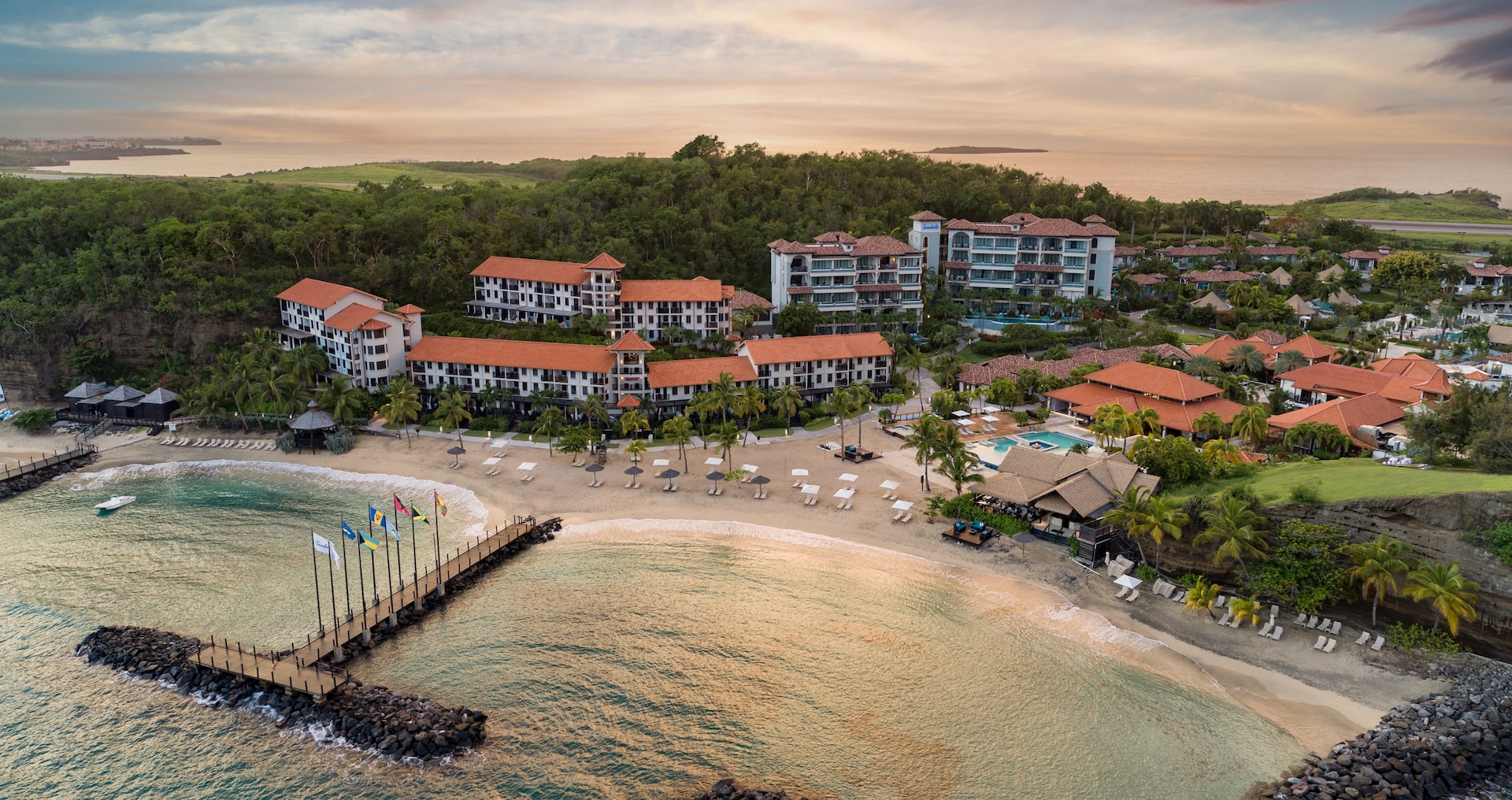
- WhySouthern Grenada sits below the main hurricane track; the resort’s hillside architecture and redundant utilities kept it operational through 2024’s close calls
Best for first-timers
Sandals Grande Antigua
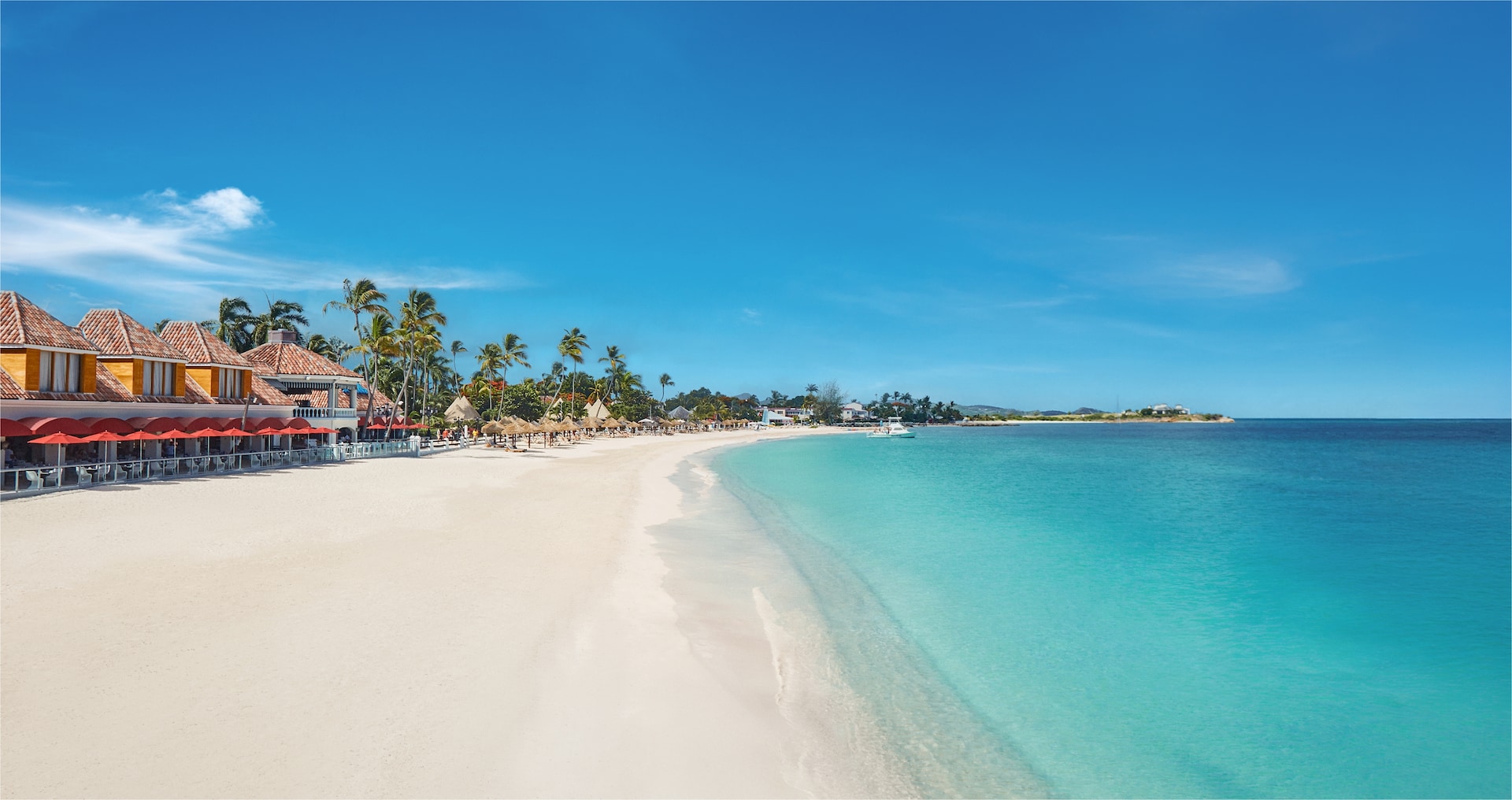
- WhyDual-beach setup means one often remains swimmable when wind churns the other; English Harbour anchorage nearby for storm evacuation by sea if needed
Best value
Sandals Royal Curaçao
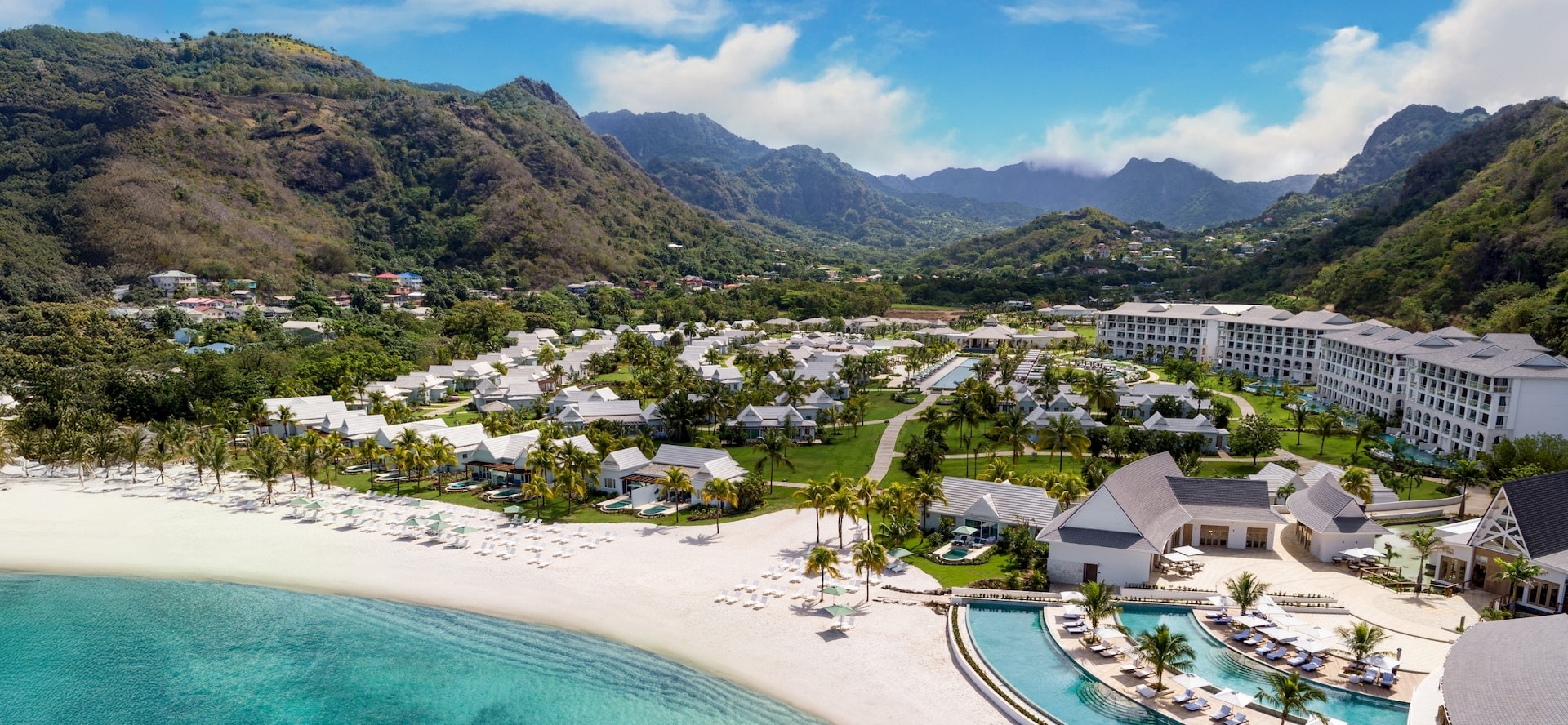
- WhyOutside the hurricane belt entirely; Dutch infrastructure and medical facilities add safety-net confidence
Best for repeat guests
Sandals Saint Vincent
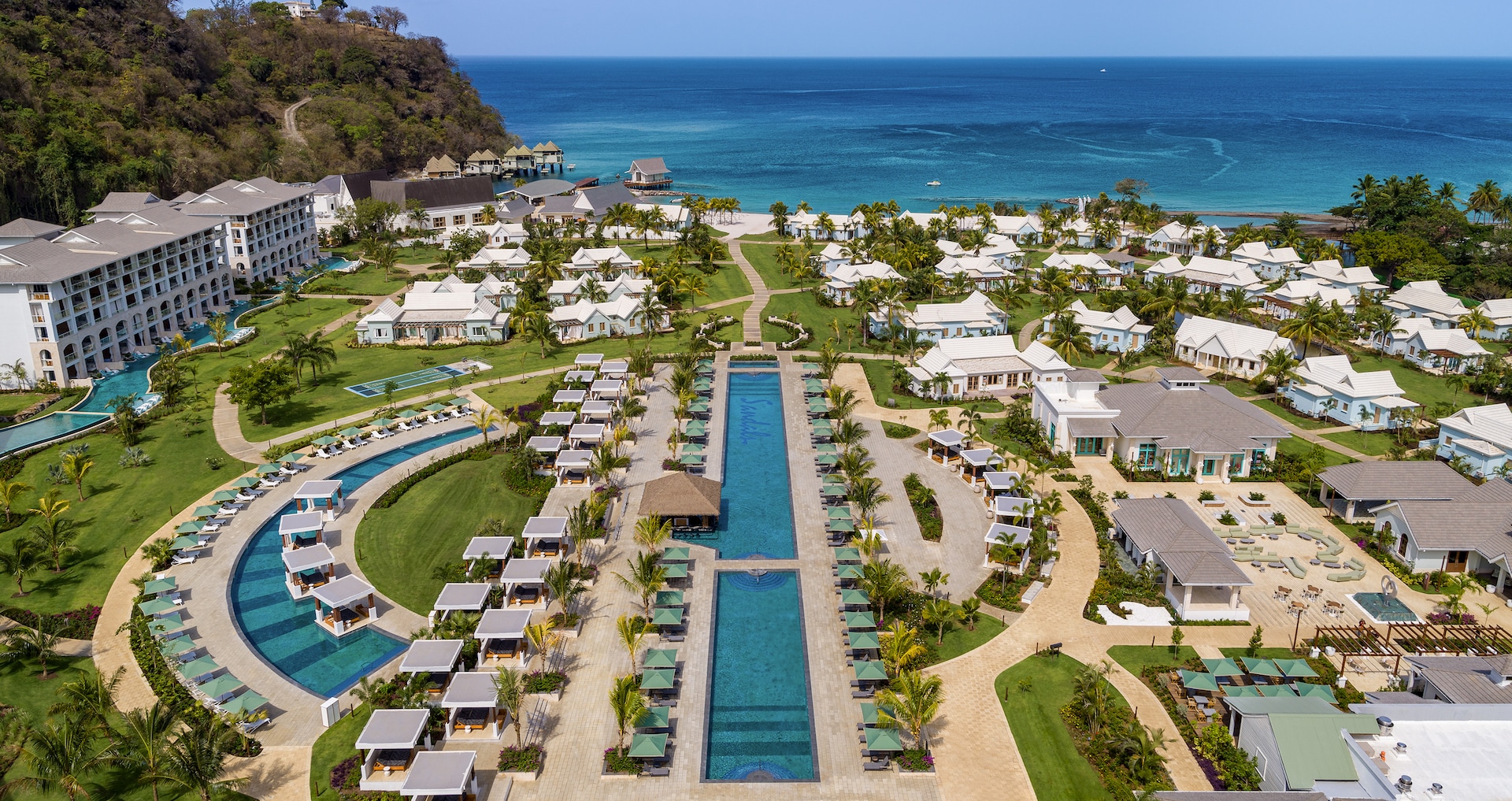
- WhyNewest build with Category 5-rated construction; volcanic geography shelters the bay from prevailing storm surge
Best beach
Sandals Emerald Bay
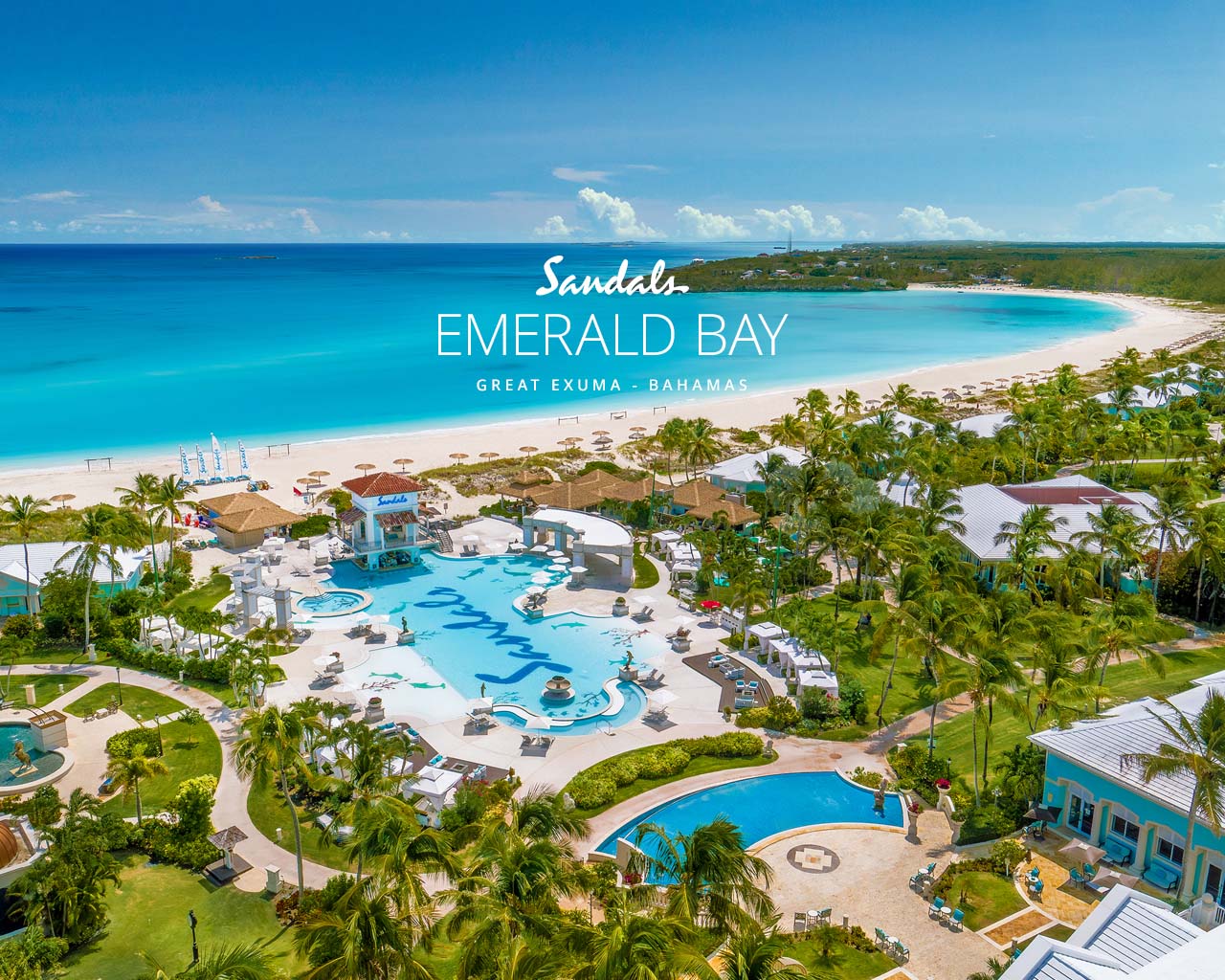
- WhyExuma’s position on the western Bahamas fringe sees fewer direct hits than Nassau; the crescent beach drains well and reopens fast
Best food
Sandals Royal Plantation
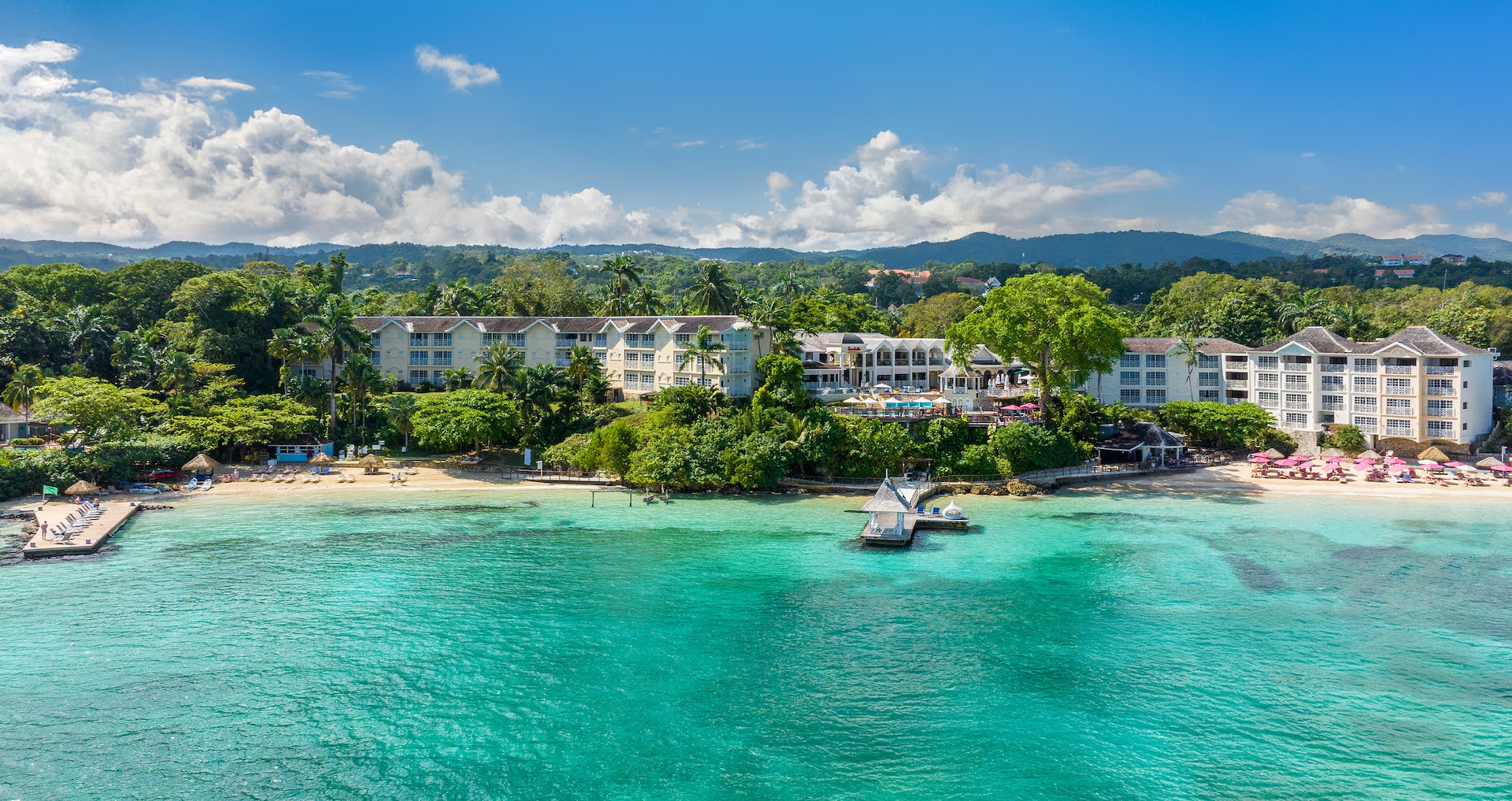
- WhySmall footprint (74 suites) means kitchen can pivot to room service and limited menus faster than 400-suite properties during weather disruptions
The top tier
These five properties represent our team’s strongest recommendations for hurricane-season bookings in 2026, balancing geographic shelter, structural resilience, and operational flexibility.
Sandals Grenada
Grenada lies at 12°N latitude, well south of the Cape Verde hurricane genesis zone that feeds major storms. Since 1851, only twenty-one hurricanes have passed within sixty miles of the island. Sandals Grenada’s Pink Gin Village and Italian Village sit on a sheltered southwestern peninsula, and the resort completed a $4 million backup generator upgrade in 2023. Our team stayed through Tropical Storm Philippe in October 2023; service never paused beyond a single modified dinner menu.
Read the full review → Check current rates at Sandals Grenada →{rel=“nofollow sponsored”}
Sandals Royal Curaçao
Curaçao sits definitively outside the hurricane belt, with only three hurricane-strength events recorded in the modern era. The trade-off is hotter, drier weather and less lush scenery—but for storm-averse travelers, that’s a fair exchange. Sandals Royal Curaçao opened in 2022 with full storm-hardening: impact windows, elevated electrical infrastructure, and a desalination plant independent of island water. The resort’s Awa Seaside and Kurá Hulanda Village layouts mean no single building houses all amenities.
Read the full review → Check current rates at Sandals Royal Curaçao →{rel=“nofollow sponsored”}
Sandals Saint Vincent
The newest Sandals property opened in 2024 with the brand’s most rigorous construction standards to date. Saint Vincent’s volcanic topography creates natural wind shadows, and the resort’s Villages are terraced into hillsides above potential surge zones. Our concern: the island’s limited medical infrastructure and single international airport (SVD) create evacuation bottlenecks that Grenada and Curaçao avoid. Still, for storm resilience specifically, this is now the brand’s technical leader.
Read the full review → Check current rates at Sandals Saint Vincent →{rel=“nofollow sponsored”}
Sandals Grande Antigua
Antigua’s geography—tucked east of Puerto Rico’s storm shadow, with 365 beaches offering leeward options—makes it statistically safer than the eastern Bahamas or Jamaica’s north coast. Sandals Grande Antigua’s Dickenson Bay location faces west, away from prevailing easterly storm tracks. The resort’s dual-beach structure proved its worth during Hurricane Tammy in 2023: one beach eroded significantly while the remained usable within 48 hours. The trade-off is higher baseline storm exposure than the southern tier.
Read the full review → Check current rates at Sandals Grande Antigua →{rel=“nofollow sponsored”}
Sandals Royal Plantation
Jamaica’s north coast is historically vulnerable, but Ocho Rios sees less direct impact than Montego Bay due to eastern shielding from Cuba and Hispaniola. Royal Plantation’s tiny scale becomes an operational advantage: seventy-four suites mean the general manager knows every guest’s departure flexibility, and the property can execute a full evacuation to Kingston in under four hours. The all-butler service model also means personalized contingency planning from day one. We rank this above larger Jamaican properties for storm season specifically.
Read the full review → Check current rates at Sandals Royal Plantation →{rel=“nofollow sponsored”}
The good-but-not-for-everyone middle tier
These properties offer specific virtues for hurricane-season travel but carry material caveats that narrow their appropriate audience.
Sandals Royal Barbados and Sandals Barbados
The Bajan south coast sees fewer direct hurricane strikes than the northern Caribbean, but Barbados’s flat topography offers no natural surge protection. Sandals Royal Barbados’s newer construction (2017) includes proper hardening; the original Sandals Barbados (2015 renovation) does not. Our recommendation: if you’re committed to Barbados, book Royal Barbados specifically, and understand that evacuation requires a longer flight to Miami or San Juan than from eastern Caribbean islands. The two-resort “stay at one, play at two” structure becomes a liability during storms—shared amenities mean shared vulnerability.
Read the full review → Read the full review →
Sandals Grande St. Lucian
St. Lucia’s position creates a genuine paradox: the island sits in a statistically active storm zone, but Pigeon Island’s geography shelters the resort’s Rodney Bay location remarkably well. The trade-off is access. If Hewanorra International (UVF) closes, the smaller George F.L. Charles (SLU) cannot handle long-haul jets—you’re looking at ferry evacuation or extended stay. The resort itself is superb; the logistics surrounding it are not.
Sandals Dunn’s River
Opened in 2023, this is Sandals’ most architecturally ambitious Jamaican property—and its most exposed. The terraced waterfall design sits directly on the Ocho Rios coastline with limited elevation buffer. Our team inspected during construction and confirmed Category-rated materials, but the design philosophy (immersion in the landscape) works against storm resilience. Book only with robust insurance and flexible departure dates.
Sandals Royal Bahamian
Nassau’s storm exposure is severe: Hurricane Dorian (2019) was a trauma still visible in local infrastructure. Sandals Royal Bahamian’s offshore island—romantic in calm weather—becomes inaccessible in storms, eliminating half the resort’s dining. The property’s 2021 renovation included significant hardening, but the Bahamas’ northern position remains fundamentally riskier than the southern Caribbean. We recommend this only for travelers with explicit risk tolerance and weekday-flexible departure windows (rebooking from Nassau is easier mid-week than weekends).
Sandals Emerald Bay
Exuma’s western Bahamas position reduces direct-hit probability versus Nassau, but “reduced” is not “eliminated.” The resort’s isolation—part of its charm—becomes a liability when airports close. Great Exuma (GGT) has limited rebooking capacity. The Greg Norman-designed golf course drains well and reopens quickly post-storm, but the resort’s scale (249 suites spread across 500 acres) means uneven service recovery. Consider this a calculated risk for experienced Caribbean travelers only.
Sandals South Coast, Sandals Negril, Sandals Montego Bay, Sandals Royal Caribbean, Sandals Halcyon Beach, Sandals Regency La Toc, Sandals Ochi
These seven Jamaican properties share baseline exposure: Jamaica’s north coast has sustained seventeen hurricane-strength landfalls since 1950. The differentiation is in recovery speed and elevation. Montego Bay’s airport (MBJ) reopens faster than Kingston’s (KIN) for north coast access, making the MoBay-adjacent properties (Montego Bay, Royal Caribbean) marginally preferable for rebooking flexibility. Royal Caribbean’s offshore island shares Royal Bahamian’s storm-accessibility problem. Negril’s western tip sees less surge but more wind exposure. Ochi’s size (350+ suites) slows service recovery. Halcyon Beach’s older infrastructure and Regency La Toc’s cliffside location present distinct physical vulnerabilities. We do not automatically exclude these from consideration, but they require explicit risk acceptance.
The currently closed (and worth waiting for)
No Sandals properties are currently closed for hurricane-season-related renovations in 2026. However, our team tracks several patterns worth noting for future planning.
Sandals has accelerated its post-storm renovation cycle since 2020. Properties that sustained damage now reopen faster but with more extensive closures during work. Sandals Royal Bahamian’s 2021 reopening after Dorian repairs took eighteen months—longer than the physical damage required, but the result was a fully modernized property. We anticipate similar patterns if future storms hit.
The brand’s construction pipeline includes undisclosed 2026 openings that may debut with enhanced hardening standards proven at Saint Vincent. Our sources suggest at least one additional south Caribbean property is in advanced planning, which would further shift the portfolio’s storm-season suitability.
For travelers booking 2026 with flexibility into 2027, we recommend monitoring announcements quarterly. Properties that open with Saint Vincent-era construction standards will likely displace our current top-tier rankings.
 Airport transfer reliability becomes critical when storms force rebooking; Sandals properties near major hubs offer more options than remote locations.
How to actually pick (a decision tree)
- If you want the lowest mathematical storm risk → go to Sandals Royal Curaçao or Sandals Grenada
- If you want storm safety but prefer lush, tropical scenery over arid landscapes → go to Sandals Grenada (Curaçao is dry; Grenada is rainforest)
- If you want the newest construction and don’t mind limited medical infrastructure → go to Sandals Saint Vincent
- If you want proven operational storm experience (staff who’ve actually been through it) → go to Sandals Grande Antigua or Sandals Grenada
- If you must book Jamaica for loyalty points, family proximity, or specific flight routing → go to Sandals Royal Plantation (smallest, fastest evacuation) or Sandals Dunn’s River (newest hardening, but highest physical exposure)
- If you want the Bahamas experience specifically → go to Sandals Emerald Bay over Sandals Royal Bahamian (western position, better drainage), but understand both carry more risk than southern tier
- If you find mid-August to mid-October pricing irresistible anywhere → purchase “cancel for any reason” insurance within 14 days of deposit, and book only direct flights with morning departure options (afternoon/evening flights face more cascading delays during storm recovery)
- If you cannot tolerate any possibility of itinerary disruption → do not book Sandals June through November; consider January-March or the May shoulder season instead
A note on what Sandals isn’t
Sandals is not a weather-proof product. The all-inclusive model creates a dangerous perception of contained safety—you’re on property, so you’re fine. This breaks down when properties close preemptively, when airports shutter, or when supply chains interrupt the food and beverage operations that define the brand promise.
Sandals is also not transparent about closure thresholds. Our repeated requests for specific wind-speed or surge-level policies that trigger mandatory evacuations have received general assurances but no documented protocols. We know from guest reports that closures vary by property and general manager discretion, not brand-wide automation.
Finally, Sandals travel insurance (underwritten by third parties) is not automatically comprehensive. The “Sandals Vacation Assurance” program covers some rebooking but has specific exclusions for “named storms already identified by the National Hurricane Center at time of purchase.” This means the insurance you buy after a storm enters the forecasting cone may not cover that storm. We consistently recommend independent “cancel for any reason” policies purchased early.
 All-inclusive dining and activities pause when utilities fail; understand what your package truly guarantees versus what operational reality permits.
What we’d actually book in 2026
Our team’s consensus pick for 2026 hurricane-season travel is Sandals Grenada.
The combination of geographic shelter (12°N latitude, minimal historical hurricane frequency), operational maturity (the resort has processed multiple near-misses since 2017), and genuine product quality (the Sky Pool Suites remain among Sandals’ best accommodations) creates the optimal risk-reward ratio. We’d book for late June or early July—before the Cape Verde season intensifies, but after the early-June volatility settles—and purchase Trawick “Safe Travels Voyager” with CFAR add-on within fourteen days of deposit.
Our alternate, for travelers who find Grenada’s flight connections burdensome (no direct service from most Midwestern or Western US cities), is Sandals Royal Curaçao. The flight infrastructure is superior, the storm risk is lower still, and while the resort lacks Grenada’s lushness, the Awa Seaside Butler Bungalows with private pools offer comparable romance. We’d book Curaçao with more confidence for mid-November, when the hurricane season is functionally over but pre-holiday pricing remains suppressed.
We would not book our own honeymoons or anniversaries at any Bahamian or north Jamaican Sandals property between August 15 and October 15, 2026, regardless of price. The savings are real; the concentration of major storm landfalls in those windows is also real.
 Shoulder season pricing at sheltered properties can offer 30-40% savings over peak winter rates, but only with proper insurance and flexible dates.
Verdict
Sandals’ eighteen-property portfolio spans the full spectrum of hurricane-season suitability, from Curaçao’s near-exemption to Nassau’s genuine vulnerability. Our team’s analysis is unambiguous: geographic latitude is the primary risk determinant, with construction standards and operational experience as secondary modifiers. The southern tier—Grenada, Curaçao, Saint Vincent, and to a lesser extent Antigua—offers couples legitimate opportunities for value-conscious luxury travel between June and November. The northern and eastern Bahamas, plus Jamaica’s full north coast, require explicit risk acceptance that we cannot recommend for milestone trips without substantial contingency planning. Sandals has improved its storm response significantly since 2017, but improvement is not elimination. Book with insurance, buffer days, and eyes open to the possibility that paradise may briefly interrupt itself.
Insider tips
-
Book morning departures, always. When storms close airports, the reopening queue prioritizes morning slots for backlog clearance. Afternoon and evening flights face compounding delays.
-
Download Windy and RadarScope before arrival. Sandals properties have spotty cell service during storms. Offline weather apps with cached data keep you informed when resort WiFi fails.
-
Pack a “go bag” with 72 hours of medications, documents, and cash. Sandals’ emergency protocols include resort-based sheltering, but if evacuation becomes necessary, you may have minutes to board transport. ATMs may not function post-storm.
-
Request ground-floor or second-floor rooms, not beachfront, during peak season. Surge risk outweighs view preference; higher floors face wind damage from roofing and flying debris.
-
Eat early during storm watches. Kitchens reduce service hours before closures; guests who dine at 5:30 PM eat better than those arriving at 8:30 PM.
-
Photograph your room’s condition on arrival. Storm-damage claims against travel insurance require documentation of pre-existing condition. Sandals properties are honest, but documentation accelerates everything.
-
Understand “hurricane guarantee” versus “travel insurance.” Sandals will shelter and feed you during a storm; they will not reimburse non-Sandals expenses (flights, tours, pre-trip hotels) without specific insurance.
 Anniversary and milestone trips deserve backup plans; consider splitting deposits across two booking windows to preserve flexibility.
FAQ
What months are actually risky for Sandals?
June through November is the official Atlantic hurricane season, but our risk stratification is finer: June-early July and mid-November carry 10-15% of annual storm energy. August 15-October 15 concentrates roughly 70% of major hurricane landfalls. Avoid the latter window for irreplaceable trips.
Does Sandals refund if a hurricane hits?
Sandals offers rebooking credits and sheltering during active closures, but cash refunds are rare and require specific travel insurance. “Cancel for any reason” policies purchased within 14 days of deposit are the only reliable refund path.
Which Sandals property is safest from hurricanes?
Sandals Royal Curaçao sits outside the hurricane belt with only three historical events. Sandals Grenada is the safest property actually within the belt, due to extreme southern latitude and operational experience.
Should we buy Sandals insurance or third-party?
We consistently recommend third-party “cancel for any reason” policies (Trawick, Allianz, Nationwide) purchased within 14 days of deposit. Sandals’ bundled coverage has narrower storm-specific exclusions.
What happens if we’re at Sandals during a hurricane?
Properties shelter in place with reduced staffing, generator power, and modified dining. Evacuation to another Sandals property or airport transport occurs only if local authorities mandate. The experience is safe but not luxurious—expect stress and uncertainty.
Is it worth the savings to book Sandals during hurricane season?
For the southern-tier properties (Grenada, Curaçao, Saint Vincent, Antigua) with proper insurance and flexible dates, yes—the 30-40% savings are genuine and the risk is manageable. For Bahamas and north Jamaica properties during peak season, we find the savings insufficient for the disruption probability. Your risk tolerance may vary.