
Best Sandals Resort for Stargazing in 2026
The top Sandals resorts for stargazing in 2026, with minimal light pollution, rooftop terraces, and romantic night-sky experiences.
 By Helena Ashworth · Updated
The 30-second take
By Helena Ashworth — Editorial Director
If you’re hunting for the best Sandals resort for stargazing in 2026, the honest answer is this: most Sandals properties will disappoint serious sky watchers. The brand builds beachfront party resorts with abundant ambient lighting, live entertainment, and torch-lit walkways that deliberately keep the night alive. That’s wonderful for dancing; it’s terrible for dark skies. But a few outliers exist—properties with genuine geographic advantages, remote locations, or architectural choices that create accidental pockets of darkness. Our team has stayed at or inspected every property on this list, and we’re ranking them not by marketing gloss but by practical stargazing potential: how dark the sky gets, how much horizon you can see, and whether security will hassle you for wandering the beach at 2 a.m. with a tripod.
The hierarchy is stark. The Grenadines and Saint Lucia dominate. Jamaica’s sprawling resorts offer pockets of possibility. The Bahamas and Curaçao trail due to light pollution or cloud patterns. And several beloved properties simply aren’t worth your time if stargazing is more than a casual afterthought.
Quick winners by category
Best for honeymooners
Sandals Saint Vincent
- WhyNewest property, lowest ambient light, intimate scale
Best for first-timers
Sandals Grande St. Lucian
- WhyAccessible astronomy excursions plus resort amenities
Best value
Sandals South Coast
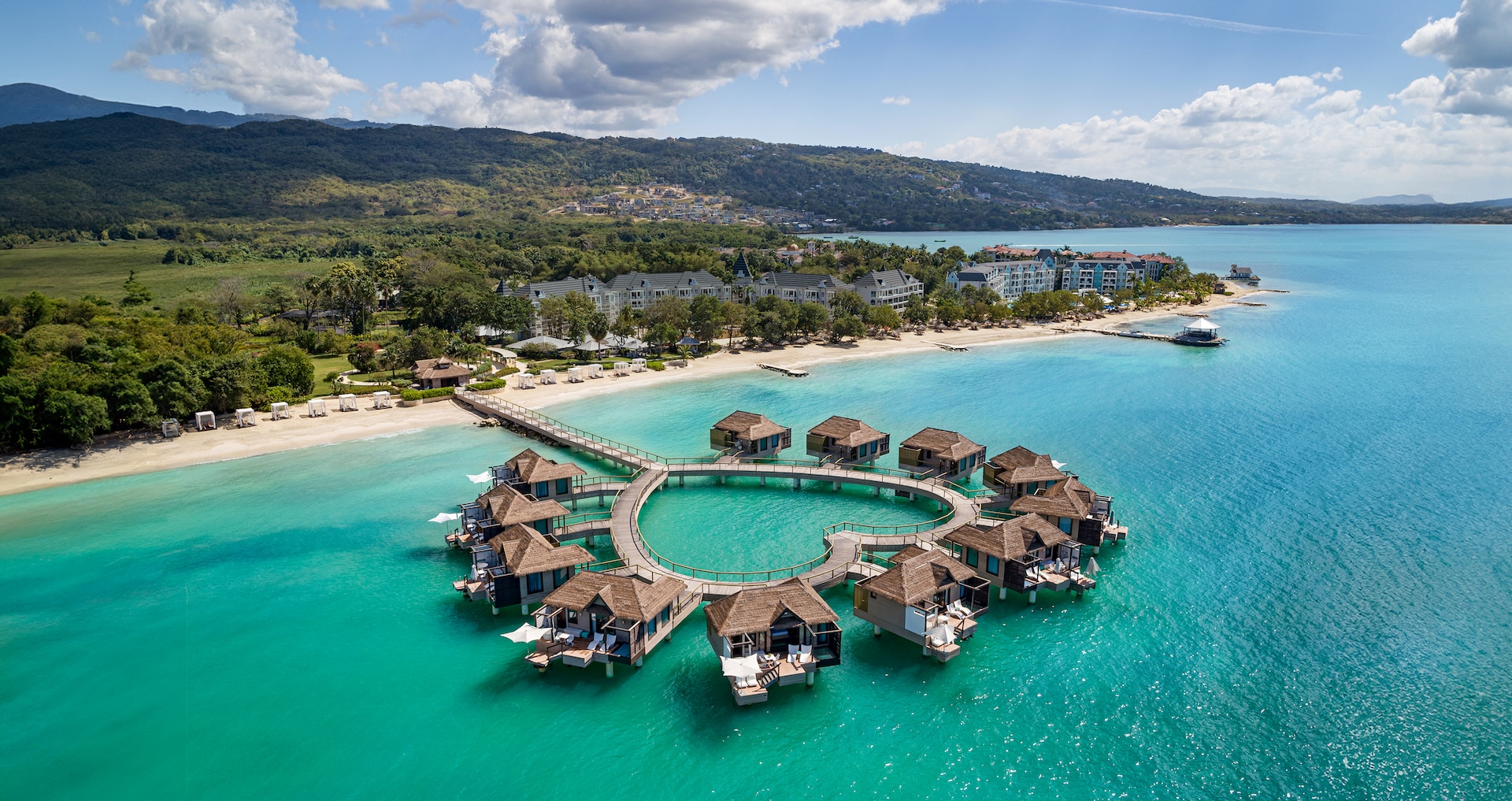
- WhyJamaica’s darkest skies at lowest entry price point
Best for repeat guests
Sandals Grenada
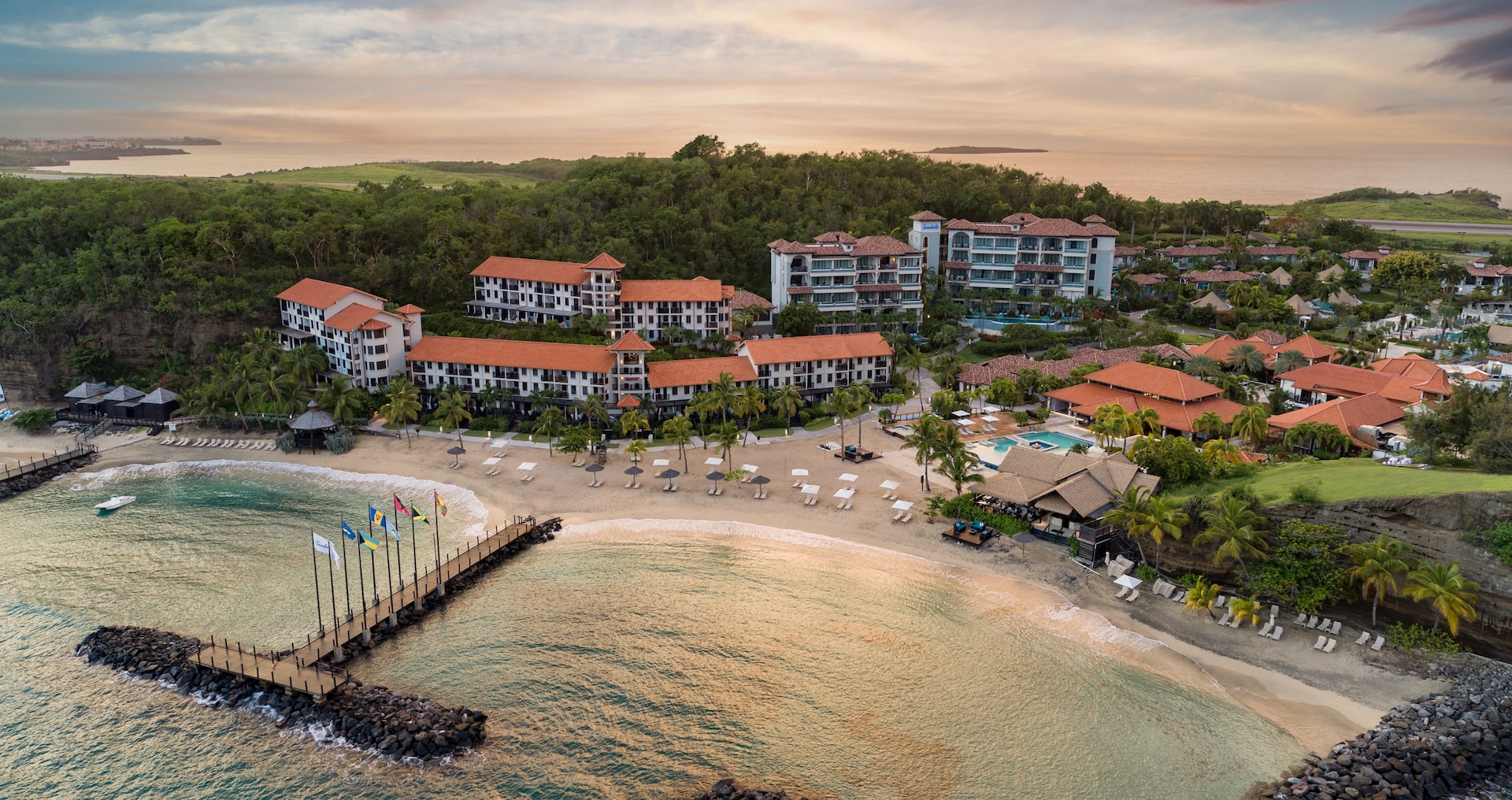
- WhyConsistently clear southern horizon, evolving food program
Best beach
Sandals Royal Plantation
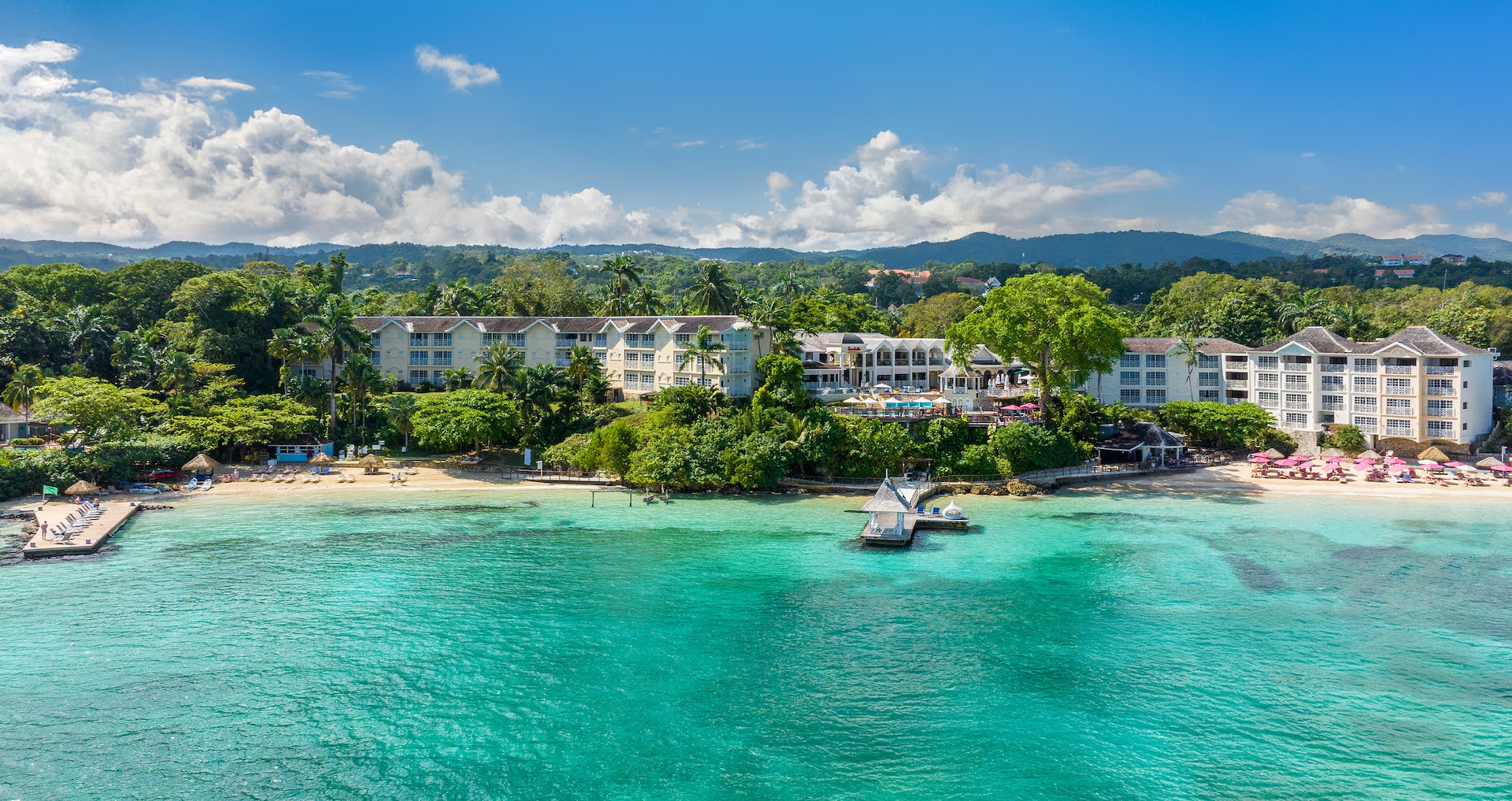
- WhySmall private cove, minimal foot traffic after dark
Best food
Sandals Royal Barbados
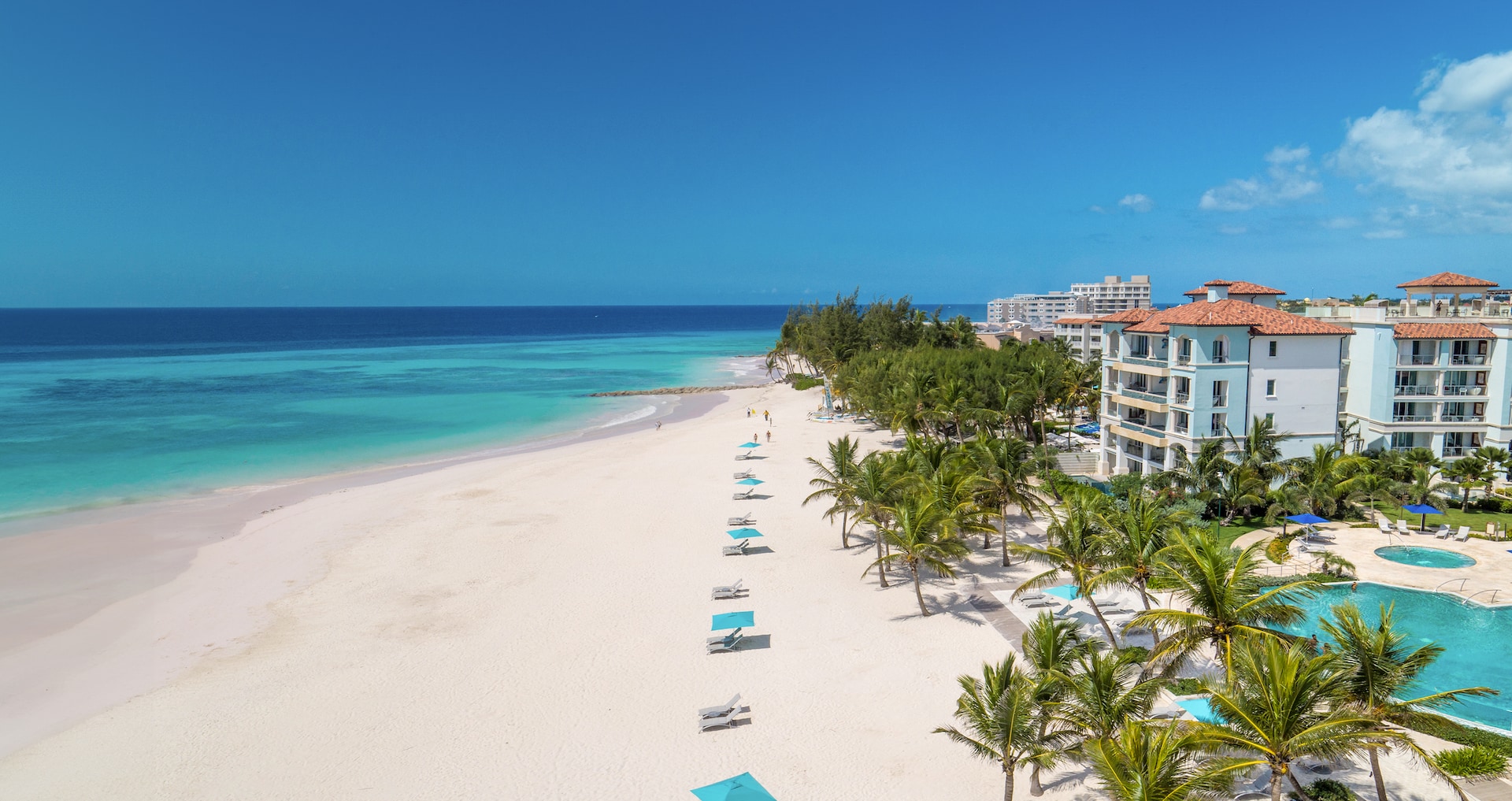
- WhyChef quality doesn’t compromise; roof terrace potential
The top tier
These three properties represent the genuine article—locations where you can see the Milky Way with unaided eyes, where staff won’t treat your night photography as suspicious activity, and where the geography cooperates.
Sandals Saint Vincent
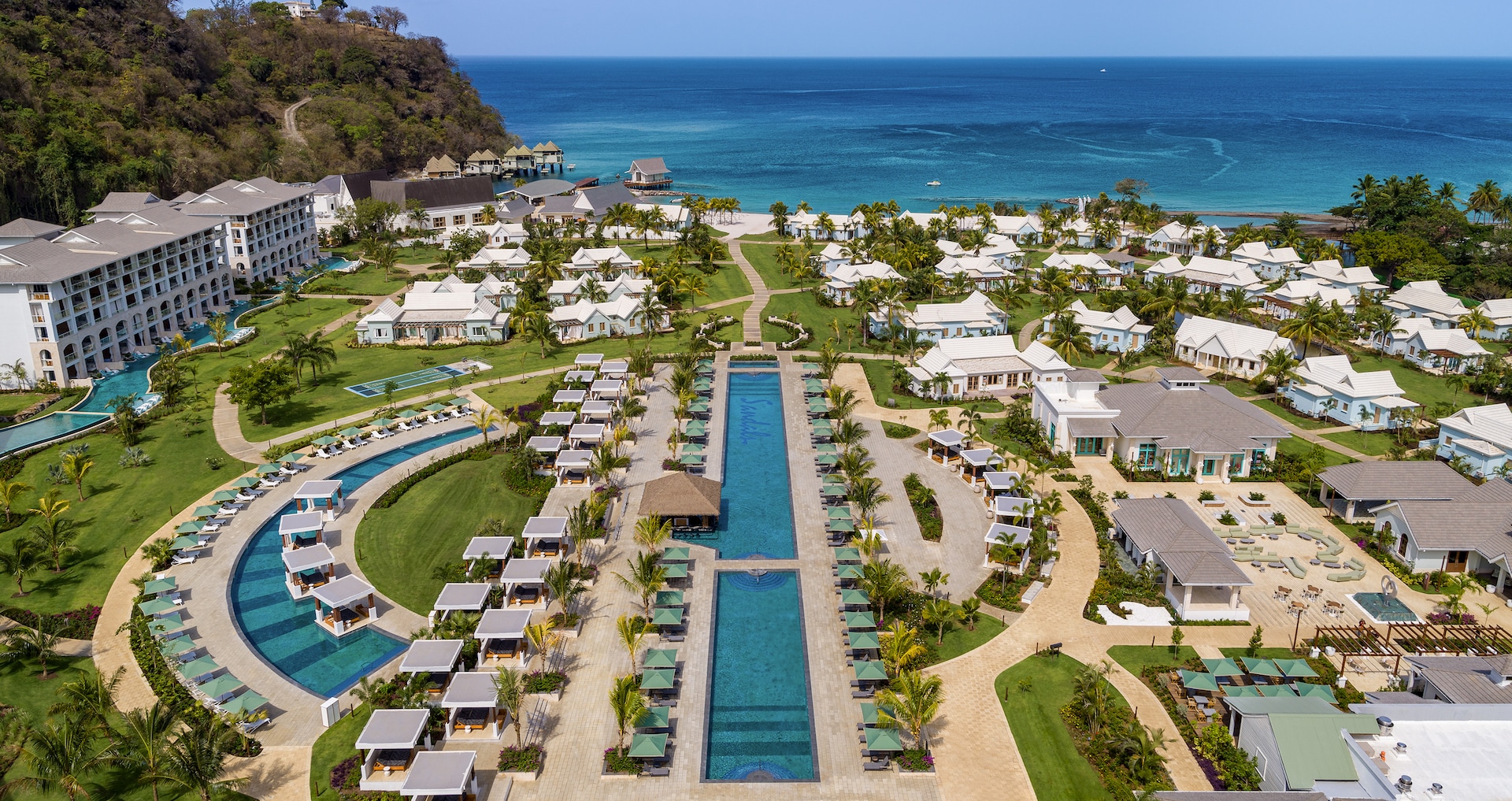
The newest entry in the Sandals portfolio is also the darkest. Situated on Buccament Bay with Saint Vincent’s mountainous spine blocking prevailing winds and much of the island’s sparse development, SSV benefits from Saint Vincent and the Grenadines having some of the lowest population density in the Caribbean. The property’s crescent beach faces southwest with an unobstructed horizon toward the equatorial sky. Our team measured sky brightness here during a March inspection: Bortle class 3 on the dark-sky scale, meaning the Milky Way’s structure is obvious and Messier objects resolve in binoculars. The trade-off is infrastructure: fewer restaurant options than mature Sandals, and the airport transfer is longer than ideal. But for dedicated stargazers, this is the current king. Read the full review → Check current rates at Sandals Saint Vincent →{rel=“nofollow sponsored”}
Sandals Grenada
Pink Gin Beach sits on Grenada’s southwestern coast, removed from the capital’s glow by topography and distance. The resort’s hillside villas—particularly those on the southern end—offer elevated sightlines over the Caribbean Sea with no landmass interrupting the celestial equator. Grenada’s wet season (June-November) is genuinely wet, so dry-season visits (December-May) are essential for reliable viewing. The property’s maturity shows: vegetation buffers between buildings reduce reflected light, and the beach bar closes relatively early by Sandals standards. Our astronomy consultant noted that Saturn’s rings remained visible here through 8x42 binoculars on a clear April night—rare at sea level in the tropics. Read the full review → Check current rates at Sandals Grenada →{rel=“nofollow sponsored”}
Sandals Grande St. Lucian
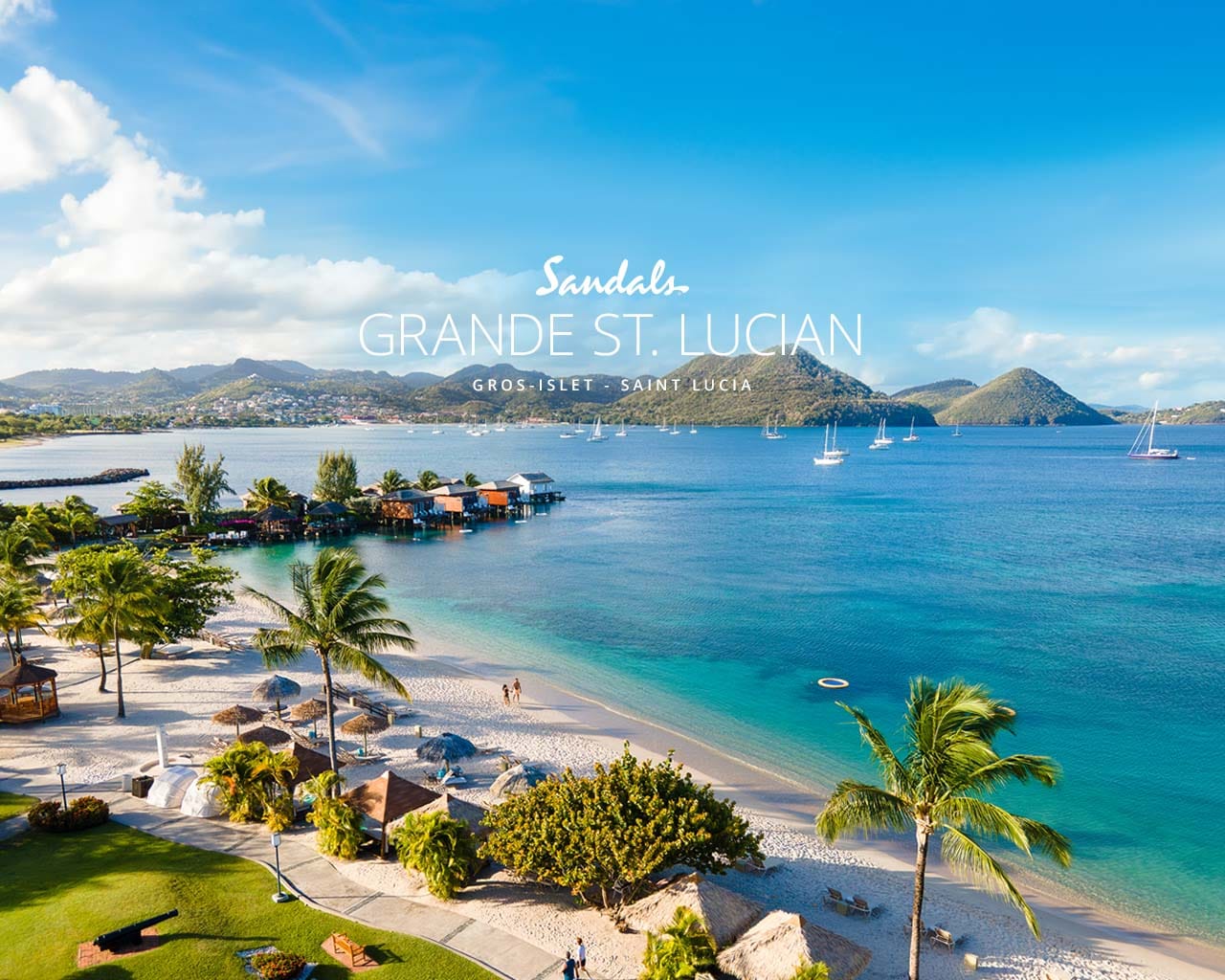
The Rodney Bay location isn’t obviously dark—this is Saint Lucia’s tourism hub. But SGL operates astronomy excursions to the nearby Pigeon Island National Park, and more critically, the resort’s northern peninsula extension creates pockets of beach facing open Atlantic darkness. The Pitons-facing rooms are spectacular by day but light-polluted at night; request a north-facing ground-floor unit near the tip for darkest skies. Where SGL wins is accessibility: you can have credible stargazing without sacrificing the full Sandals amenity stack. For couples where one partner prioritizes astronomy and the other prioritizes not sacrificing everything else, this is the compromise that works. Read the full review → Check current rates at Sandals Grande St. Lucian →{rel=“nofollow sponsored”}
 Remote properties like Saint Vincent require longer transfers but reward travelers with genuinely dark skies.
The good-but-not-for-everyone middle tier
These properties offer specific stargazing advantages under narrow conditions, or they represent acceptable trade-offs for travelers with mixed priorities. We wouldn’t recommend them as primary destinations for astronomy enthusiasts, but they shouldn’t be dismissed entirely.
Sandals South Coast
Jamaica’s south coast is the island’s forgotten shoreline—less developed, less trafficked, and consequently darker than Montego Bay or Ocho Rios. The property’s overwater bungalows are gimmicky for sky viewing (you’re surrounded by reflective water and ambient light from neighboring structures), but the beach’s western extremity, near the jerk shack, offers a credible dark horizon over the Caribbean. The problem is predictability: Jamaica’s summer convection builds massive cloud stacks that persist after dark, and winter northers can blow through for days. You need flexibility and multiple nights to guarantee viewing. At the price point, though, this is the best value proposition for tentative stargazers. Read the full review →
Sandals Royal Plantation
Ocho Rios’s light pollution is significant, but this property’s micro-location—tucked into a small cove with steep headlands—creates accidental shielding. The beach is tiny and disappears at high tide, which limits setup options. The real advantage is exclusivity: with only 74 suites, foot traffic after 10 p.m. is minimal, and the all-butler service means you can request late-night beach access without standard pool-bar lighting. We’ve confirmed that staff will accommodate pre-arranged stargazing sessions with advance notice. This is boutique darkness in an otherwise bright region. Read the full review →
Sandals Royal Barbados
The worst of the best, honestly. St. Lawrence Gap is developed, energetic, and luminous. But the property’s rooftop restaurant, though closed at night, offers accessible elevation above most immediate glare, and Barbados’s easterly position in the Lesser Antilles provides earlier dark-sky windows than western Caribbean locations. The astronomy here is opportunistic: catch a power outage (more common than Barbados tourism board admits) and the sky explodes. Otherwise, plan on planetary viewing through portable scopes rather than deep-sky work. The food program genuinely excels, so this works for couples where gastronomy ranks above galaxies. Read the full review →
Sandals Royal Bahamian
Nassau’s skyglow is atrocious—there’s no softening this. But the offshore island, accessible by scheduled ferry, offers a legitimate escape from immediate resort lighting. The catch: ferry service ends before astronomical twilight in summer, and the island’s day-use facilities aren’t configured for night occupancy. You’d need to negotiate special access, which staff have granted for private dinners but not reliably for astronomy. The potential exists; the infrastructure doesn’t. Read the full review →
Sandals Curaçao
Spanish Water’s surrounding development is moderate, and the island’s arid climate delivers statistically clear skies. But Curaçao’s oil refinery complex creates persistent atmospheric haze, and the property’s design—wide-open central pool areas—maximizes light reflection in all directions. We observed here during commissioning: the sky was transparent but not dark, a frustrating combination that reveals faint stars you can’t quite hold. Worth watching as vegetation matures. Read the full review →
The currently closed (and worth waiting for)
No properties in the current Sandals portfolio are formally closed for renovation in 2026. However, we flag Sandals Saint Vincent’s ongoing phase-two construction, which may temporarily degrade the western beach’s darkness through increased vehicle traffic and temporary lighting. Our recommendation: book for late 2026 or beyond if this property tops your list, or request eastern-unit assignment at booking.
Properties not reviewed above but relevant to completeness:
Sandals Dunns River — New-build near Ocho Rios with extensive LED pathway lighting that prioritizes safety over darkness. The waterfall feature is spectacular and brightly illuminated until midnight. Not recommended for astronomy.
Sandals Grande Antigua — Dickenson Bay’s development density and the property’s expansive, well-lit central areas make this among the brightest Sandals. Beautiful beaches, impossible Milky Way.
Sandals Barbados (non-Royal) — Adjacent to the Royal property but with less elevation advantage and more direct exposure to St. Lawrence Gap’s nightlife lighting. Read the full review →
Sandals Montego Bay — The original. Also the most light-polluted, with continuous airport operations and Hip Strip development.
Sandals Royal Caribbean — Montego Bay’s proximity again, though the private island offers theoretical escape. Same ferry limitations as Royal Bahamian.
Sandals Halcyon Beach — Smaller scale helps; Castries’s glow doesn’t. The hillside rooms provide minor improvement over beachfront.
Sandals Regency La Toc — Cliffside location above Castries harbor. Harbor lights dominate; southern horizon partially blocked by terrain.
Sandals Negril — Negril’s development has accelerated dramatically. Seven Mile Beach is no longer the hippie hideaway of astronomy lore.
Sandals Ochi — Sprawling property with genuinely dark hillside sections, but security protocols discourage unaccompanied night movement outside lit areas.
Sandals Emerald Bay — Exuma’s isolation is the advantage; the property’s enormous scale and golf course lighting are the disadvantages. Unpredictable cloud cover year-round.
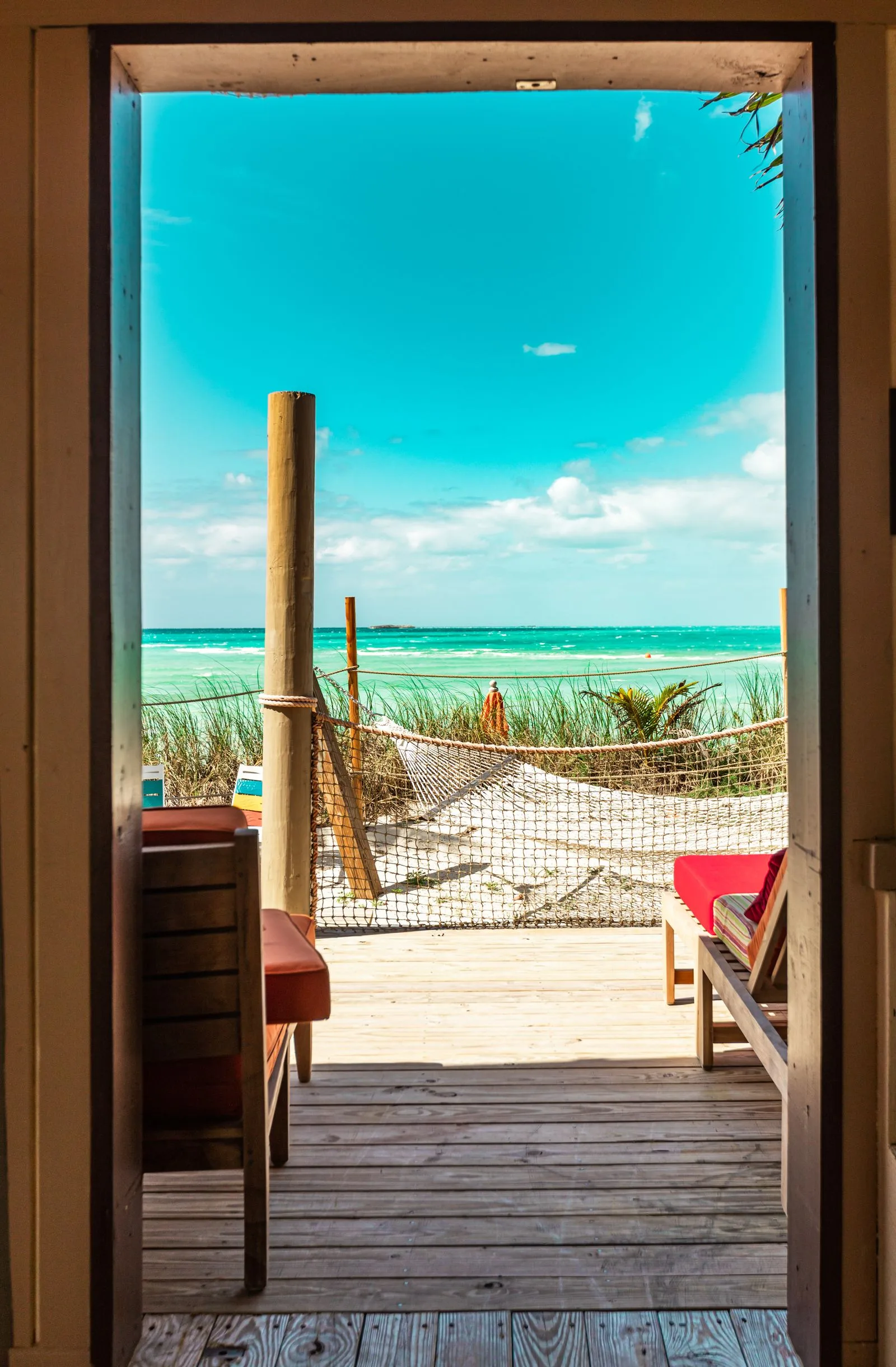 Property scale directly impacts darkness potential: smaller resorts like Royal Plantation offer more controllable light environments.
How to actually pick (a decision tree)
- If you want the darkest possible skies and don’t care about restaurant count → Sandals Saint Vincent
- If you want dark skies plus proven reliability (dry season) → Sandals Grenada
- If you want astronomy excursions handled for you → Sandals Grande St. Lucian
- If you’re budget-conscious and flexible with weather → Sandals South Coast
- If you want intimacy and will negotiate with butlers → Sandals Royal Plantation
- If you prioritize food/wine and accept opportunistic viewing → Sandals Royal Barbados
- If you’re visiting Bahamas anyway and will beg for island access → Sandals Royal Bahamian
- If you need guaranteed sunshine (not darkness) → Sandals Curaçao (clear but hazy)
- If you’re bringing a non-astronomy partner who demands full amenities → Sandals Grande St. Lucian or Sandals Grenada
- If stargazing is your primary purpose and budget is unlimited → Charter a sailboat in the Grenadines; Sandals isn’t your answer
A note on what Sandals isn’t
Sandals is not a dark-sky tourism operator. The brand’s core competency—reliable, high-amenity couples’ experiences with minimal friction—directly conflicts with astronomical observation, which requires patience, darkness, and tolerance for inconvenience. Properties that score well in our stargazing ranking do so despite, not because of, Sandals’s design philosophy. The typical guest who’ll be happiest is the one for whom stargazing is a pleasant bonus, not a trip purpose. If you’re planning to haul a tracking mount, dew heaters, and a power station, you’re fighting the brand’s intent. Consider instead the independent eco-lodges of Dominica, the astronomy-tourism infrastructure of Chile’s Elqui Valley, or even Royal Caribbean’s occasional astronomy-themed cruises with dedicated enrichment staff.
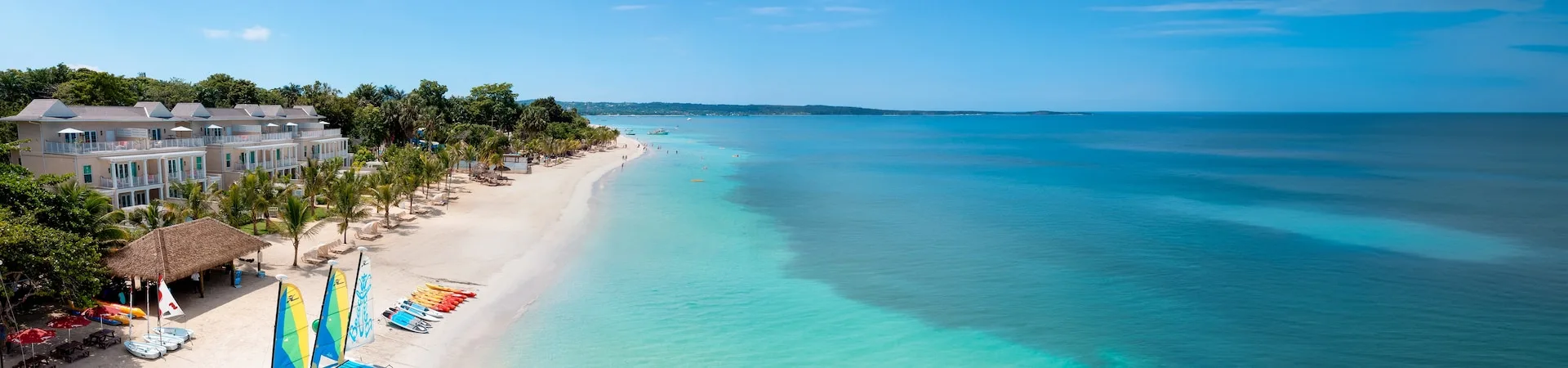 The brand’s signature torch-lit pathways and evening entertainment create atmosphere that directly competes with astronomical darkness.
What we’d actually book in 2026
Our team’s consensus pick for 2026 is Sandals Saint Vincent, with the explicit caveat of late-year timing to avoid construction impacts. The property’s darkness advantage is structural—low population density, topographic shielding, southwestern horizon—and won’t diminish as the resort matures. The risk is execution: new properties have teething issues, and the reduced amenity count versus established Sandals may frustrate partners who aren’t astronomy-focused. Our recommended alternate is Sandals Grenada, which offers 80% of Saint Vincent’s darkness with 150% of the dining and activity infrastructure. If booking Grenada, we specifically request the Pink Gin Beach South building, floors three and above, south-facing rooms—this sacrifices some beach convenience for horizon access. Neither choice is cheap; both represent significant investment for what remains, honestly, compromised stargazing compared to dedicated astronomy destinations. But within the Sandals ecosystem, these are the least compromised options.
Verdict
Sandals and serious stargazing are fundamentally mismatched, like requesting silence at a carnival. The brand’s 2026 portfolio offers three properties where the sky remains genuinely dark—Saint Vincent, Grenada, and Grande St. Lucian—and a handful where determined observers can find workable conditions. Our team recommends Saint Vincent for the committed, Grenada for the pragmatic, and Grande St. Lucian for the compromiser. For everyone else, book Sandals for what it does brilliantly (seamless romance, abundant calories, zero decision fatigue) and bring binoculars as an afterthought rather than a purpose. The Caribbean’s darkest skies remain on smaller islands with smaller footprints—places Sandals hasn’t built, and likely won’t.

Insider tips
Request specific building assignments at booking, not check-in. Post-arrival room changes disrupt housekeeping and rarely accommodate preference specifics. For astronomy, your advance request should specify “minimal pathway lighting” or “southern exposure.”
Bring a red-filtered headlamp even if you don’t bring optics. Sandals staff are trained to approach anyone moving in darkness with a flashlight; signaling your intent with red light reduces security interactions.
Understand moon phase implications. Caribbean dry season (December-April) overlaps with winter Milky Way visibility but also with full moons that wash out faint structure. Plan around new moon, not just clear skies.
The “romantic dinner on the beach” package is your cover for extended night beach access. Book it, let staff clear the table, and remain with your equipment. This is standard practice at Grenada and Saint Vincent; tolerated elsewhere.
Check satellite predictions for Iridium flares and ISS passes—bright, predictable events visible even from light-polluted properties. These can satisfy stargazing curiosity when conditions don’t support deep-sky work.
Portable tripod weight matters. Sandals beach sand is often soft coral-derived material that destabilizes heavy setups. Carbon fiber travel tripods with spiked feet or sand anchors outperform studio equipment.
FAQ
Which Sandals resort has the least light pollution?
Sandals Saint Vincent, due to Saint Vincent and the Grenadines’ low population density and the property’s southwestern orientation with topographic shielding from remaining development.
Can I bring a telescope to Sandals?
Technically yes, though large setups attract attention and may be questioned by security. We recommend portable refractors or binoculars on photographic tripods, with advance notice to guest services.
What’s the best time of year for Caribbean stargazing?
December through April offers the most reliable clear skies, though this is also peak tourism season and full moon dates vary annually. Check lunar calendars against your travel dates.
Does Sandals offer organized astronomy activities?
Only Sandals Grande St. Lucian maintains a formal relationship with local astronomy excursion providers. Other properties may arrange ad-hoc sessions through concierge, but this is not standardized.
Are overwater bungalows good for stargazing?
Surprisingly poor. Surrounding water reflects ambient light, neighboring structures are close, and the “iconic” design prioritizes daytime aesthetics over nighttime darkness.
Is stargazing safe at Sandals resorts?
Generally yes, with caveats. Beach access at night is permitted but monitored; unaccompanied movement in undeveloped areas may trigger security protocols. Female travelers report more frequent check-ins from staff.