Beaches Turks & Caicos Review (2026): Inside the Flagship Family Resort
The 4-village mega-resort on Grace Bay — Caribbean, French, Italian, Key West. Honest take on rooms, food, kids' programming, and whether the scale works or overwhelms.
 By Helena Ashworth · Updated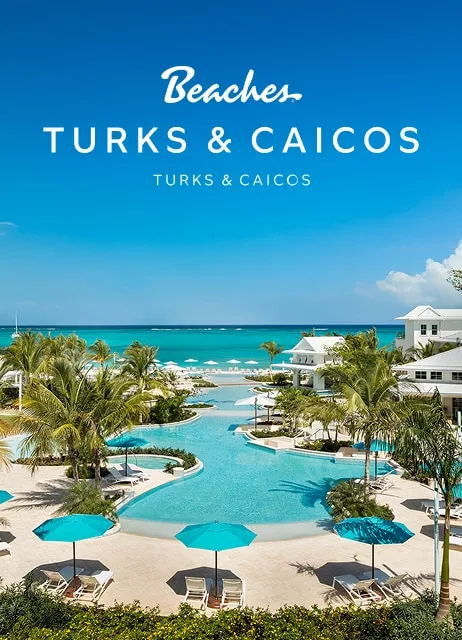
“@type”: “FAQPage”, “mainEntity”: [ { “@type”: “Question”, “name”: “What is the best time to visit?”, “acceptedAnswer”: { “@type”: “Answer”, “text”: “The best time to visit depends on your preferences. High season (December-April) offers the best weather but higher prices. Shoulder season (May-June, November) provides a good balance of weather and value.” } }, { “@type”: “Question”, “name”: “Are these resorts all-inclusive?”, “acceptedAnswer”: { “@type”: “Answer”, “text”: “Most resorts featured are all-inclusive, meaning meals, drinks, and many activities are included in the price. Always check specific inclusions before booking.” } }, { “@type”: “Question”, “name”: “How far in advance should I book?”, “acceptedAnswer”: { “@type”: “Answer”, “text”: “We recommend booking 3-6 months in advance for the best rates and availability, especially during peak season.” } }, { “@type”: “Question”, “name”: “What activities are available?”, “acceptedAnswer”: { “@type”: “Answer”, “text”: “Activities vary by resort but typically include water sports, beach volleyball, snorkeling, and evening entertainment. Many resorts also offer spa services and excursions.” } }, { “@type”: “Question”, “name”: “Is Wi-Fi included?”, “acceptedAnswer”: { “@type”: “Answer”, “text”: “Most resorts offer complimentary Wi-Fi in public areas and rooms, though connection quality may vary.” } } ]

By Helena Ashworth — Editorial Director
The 30-second take
Related planning: compare the full Beaches resort shortlist, the Sandals vs. Beaches decision guide, and our Caribbean honeymoon eSIM guide before you book.
Rate-check shortcut: compare current package pricing before you lock dates: check live rates at Beaches Turks and Caicos →rel=“nofollow sponsored”.
Beaches Turks & Caicos is the flagship of the Beaches brand — the family-focused sister line to Sandals — and it sits on twelve miles of Grace Bay, which is the kind of beach that ruins other beaches for you. It’s massive: four themed “villages” (Caribbean, French, Italian, Key West), 21 restaurants, a full water park, and a kids’ program that runs from infants through teens with Sesame Street characters built in. That scale is both the appeal and the catch.
This is the honest review of a resort that does one thing extraordinarily well — multi-generational family travel with zero planning friction — and several things less well. Food quality across 21 venues is uneven. Walking distances are real. Peak-season pricing puts a family of four well north of $1,000 per night before you’ve ordered a single drink.
Couples without kids should not book here. That’s not a knock; it’s a routing decision. If you’re traveling with children, grandparents, or a wedding party that includes both, this is arguably the strongest single property in the wider Sandals/Beaches portfolio. Expect to pay for that.
We’d book it for a family reunion, a multi-generational milestone trip, or a first all-inclusive with kids under ten where the parents need actual rest. We’d skip it for a quiet adults-only week, for a budget trip, or for travelers who want a small, intimate property where staff learn your name by day two.
The rest of this review breaks down where the value lands, where it doesn’t, and what we’d actually do with a week here.
Where it is + how to get there
The resort sits on Providenciales (universally called “Provo”), the main tourist island in the Turks and Caicos chain, on the western stretch of Grace Bay Beach. Grace Bay consistently ranks at or near the top of global beach lists, and the resort occupies one of its longer continuous frontages — roughly half a mile of sand directly in front of the property.
Stay22 planning link: compare Turks and Caicos resort and hotel options for your dates: compare Turks and Caicos resort and hotel options →{rel=“nofollow sponsored”}.
Phone-data note: Before you fly, set up a cheap backup data plan. Our Caribbean honeymoon eSIM guide compares Airalo vs. AT&T, Verizon, and T-Mobile roaming for Sandals and Beaches trips.
Getting there is unusually painless for the Caribbean. Providenciales International Airport (PLS) is a ten- to fifteen-minute drive from the resort gates — no ferry, no domestic connection, no two-hour transfer through cane fields. Direct flights run from most major US East Coast hubs (Miami, New York, Charlotte, Atlanta, Boston, Philadelphia) and from Toronto, typically clocking in at three to four hours from the Northeast.
Transfers are included in the booking. A Beaches representative meets you in the arrivals hall, walks you to a shuttle van, and you’re at check-in inside half an hour from wheels-down on a good day. That short transfer matters more than people realize when you’re traveling with a toddler or a grandparent — it’s the difference between arriving fresh and arriving wrecked.
A few practical notes. Turks and Caicos uses the US dollar, so there’s no currency math. Outlets are US standard (110V, type A/B plugs). English is the official language. US citizens need a passport but no visa for tourist stays. There is no resort tax line item that ambushes you at checkout the way some Mexican properties handle it — what’s quoted is essentially what’s charged, with gratuities already included.
One caveat: hurricane season runs June through November, with September and October being the statistical peak. Pricing reflects this, and so should your travel insurance.
The rooms
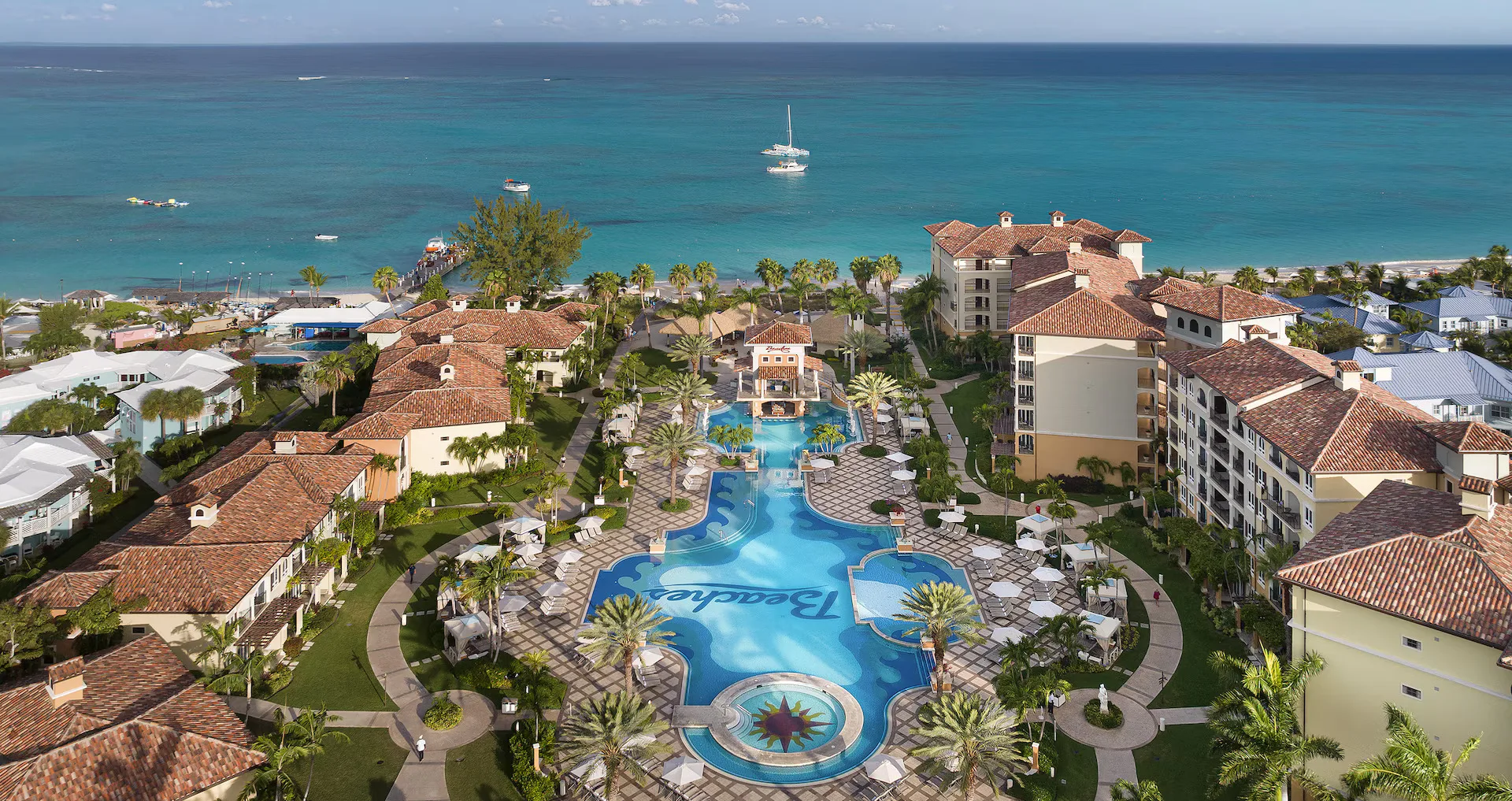
The room inventory is enormous and stratified into four villages, each with its own architectural theme and pool. Caribbean Village is the original section dating to the mid-1990s opening; French Village came online in late 2002; Italian Village in mid-2009; and Key West Village, the newest, opened in late 2014. The villages matter because they determine your walk to the beach, your room size, your price tier, and frankly your aesthetic.
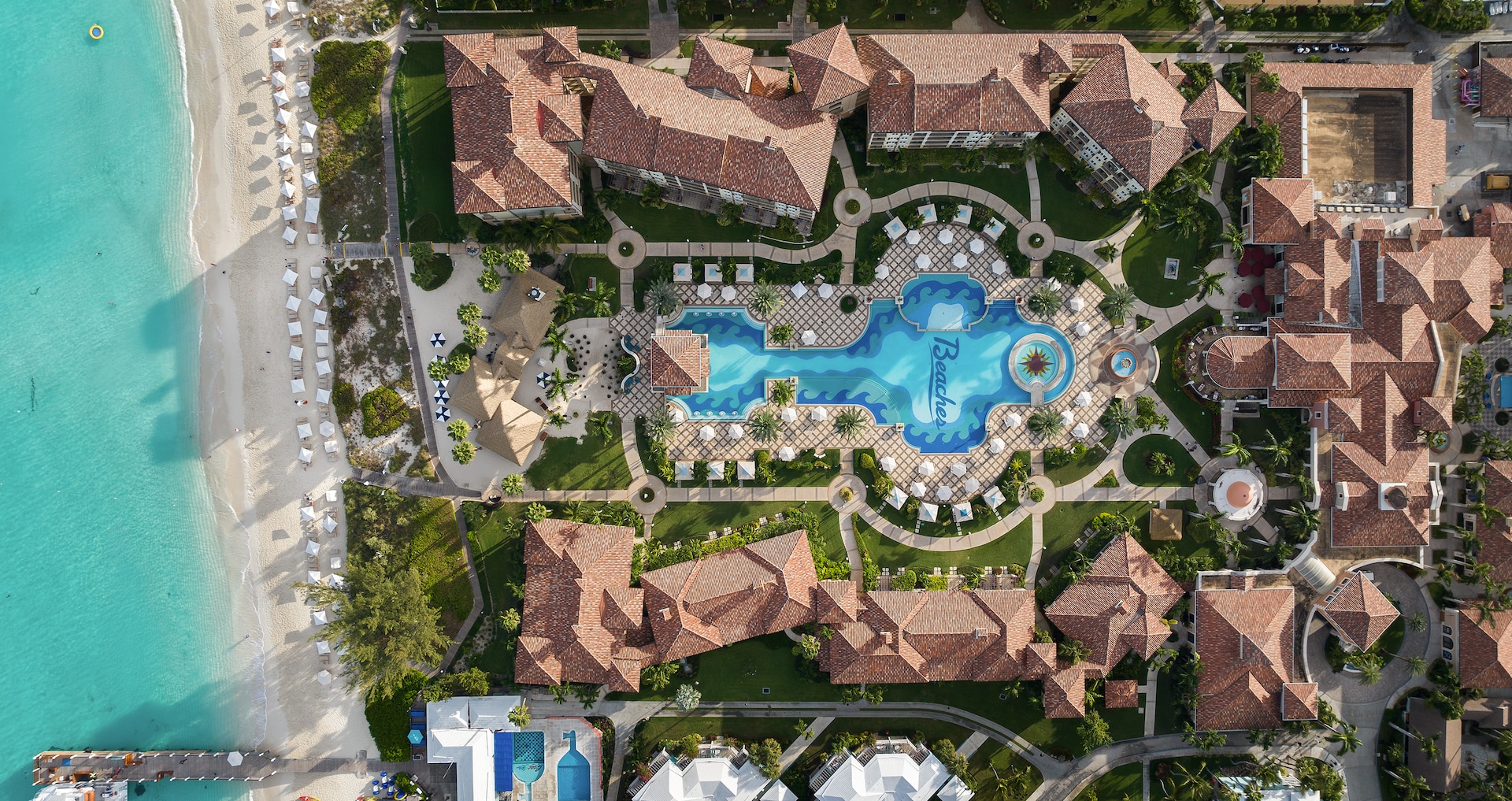 The Italian Village is the second-newest section and tends to draw families wanting larger suite layouts close to the main pool complex.
Categories run from entry-level Deluxe rooms in Caribbean Village (around 420 square feet, two queens, garden views) up through multi-bedroom Butler suites in Key West that comfortably sleep six to eight with separate kid bedrooms, full kitchens in some layouts, and dedicated butler service. Butler-level rooms get you priority restaurant reservations, in-room setup of preferred snacks and drinks, beach setup with cooler and umbrella, and someone whose actual job is preventing logistical friction from reaching you.
The honest read on rooms: Caribbean Village shows its age. Bathrooms are smaller, the décor reads dated, and soundproofing between rooms is mediocre. French and Italian Villages are the sweet spot for most families — renovated bathrooms, better closet space, and proximity to both Pirate’s Island Waterpark and the main dining cluster. Key West Village rooms are the newest and largest, with wraparound porches and a quieter, more residential feel, but they’re a longer walk to the water park and the main beach.
Walking distances are real. From a Key West suite to Bobby Dee’s by the water park is a solid eight to ten minutes on foot. Trams loop the property, but waits can be ten minutes at peak. Plan around it.
The food
Twenty-one restaurants is the headline number, and it’s accurate, but the lived experience is more nuanced. Roughly half are reservation-only specialty venues; the rest are buffets, grills, or casual walk-up spots. No single guest will hit all twenty-one in a week, and you shouldn’t try.
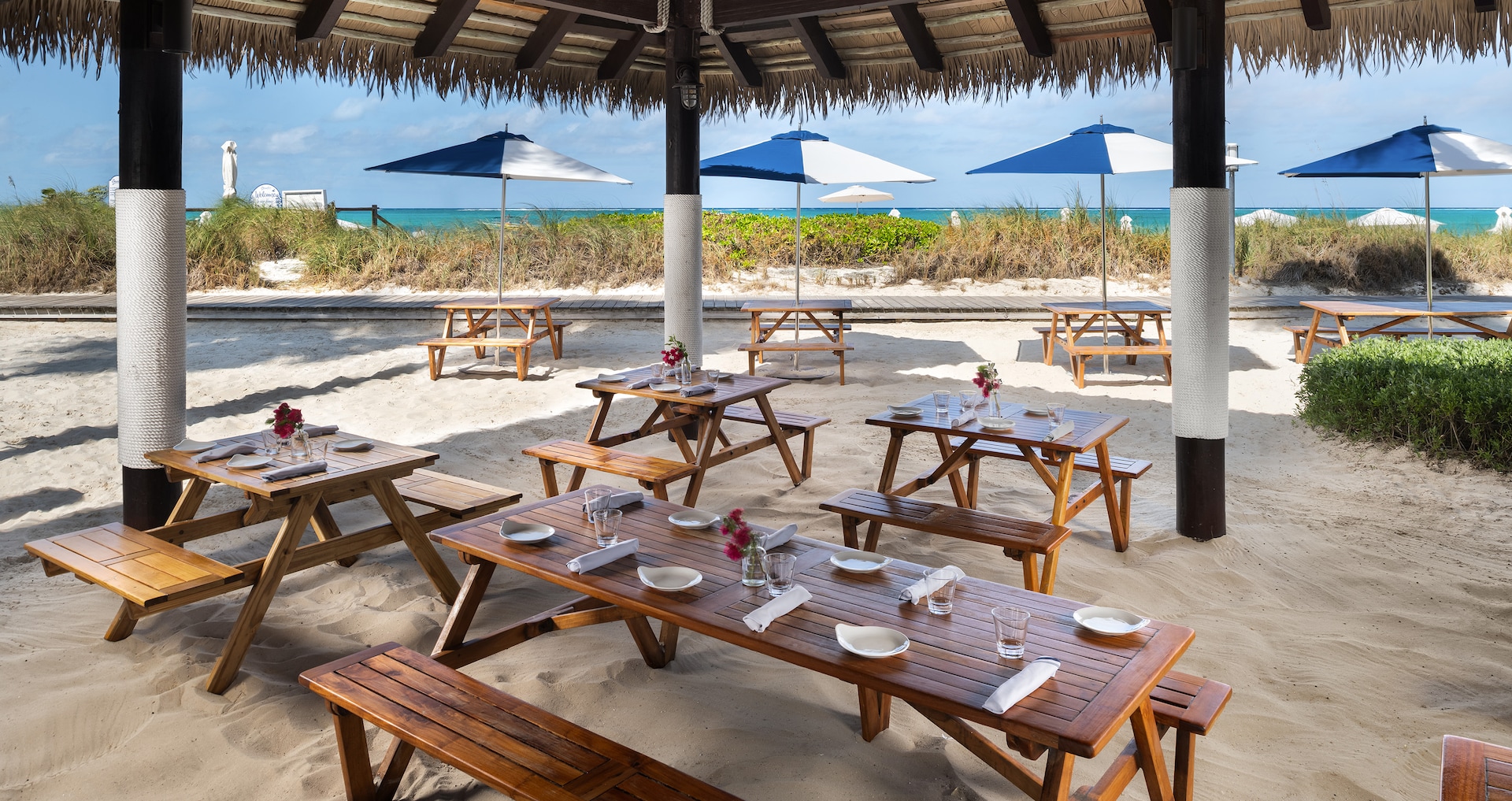 Barefoot by the Sea is the beachfront option families consistently rate highest for atmosphere; book the early seating for sunset light.
The strongest venues, in our experience and from consistent guest reporting: Kimonos (teppanyaki, theatrical, kids love it, book early in your stay because it fills); Sapodilla’s (the property’s most adult-leaning fine-dining room, jackets-not-required but it skews dressy); Le Petit Château (French, in French Village, surprisingly competent classical preparations); and Barefoot by the Sea (beachfront seafood, the most-photographed dinner room on property). Bobby Dee’s is the diner-style spot adjacent to the water park and is exactly what it needs to be when you have wet, tired children at 1pm.
The weaknesses are real. Buffet quality at the larger venues is inconsistent — breakfast tends to be strong, lunch buffets fade by mid-afternoon, and dinner buffets are the meal we’d actively avoid in favor of a specialty reservation. Sushi is competent but not destination-grade. Pizza at the Italian Village casual spots is family-friendly but not what you’d order if you’d just flown in from Naples.
Reservations are not required at most venues, but the popular four or five fill nightly, particularly in peak weeks. Butler-tier guests get a real edge here; non-butler guests should walk over the morning after arrival and book the week’s dinners in person.
Special diets are handled better than at most all-inclusives — there’s a dedicated allergy program, and the kitchens take it seriously rather than treating it as a nuisance. Families managing nut, gluten, or dairy issues consistently report this as a genuine relief.
The pools, beach, and grounds
Grace Bay is the headline asset and the reason the price tag justifies itself. The sand is powder-fine, the water shelves out gradually to a long sandbar, and the protective reef a quarter-mile offshore knocks down swell to near-zero on most days. For families with small children who want actual ocean swimming rather than chlorinated approximation of it, this is as good as the Caribbean offers.
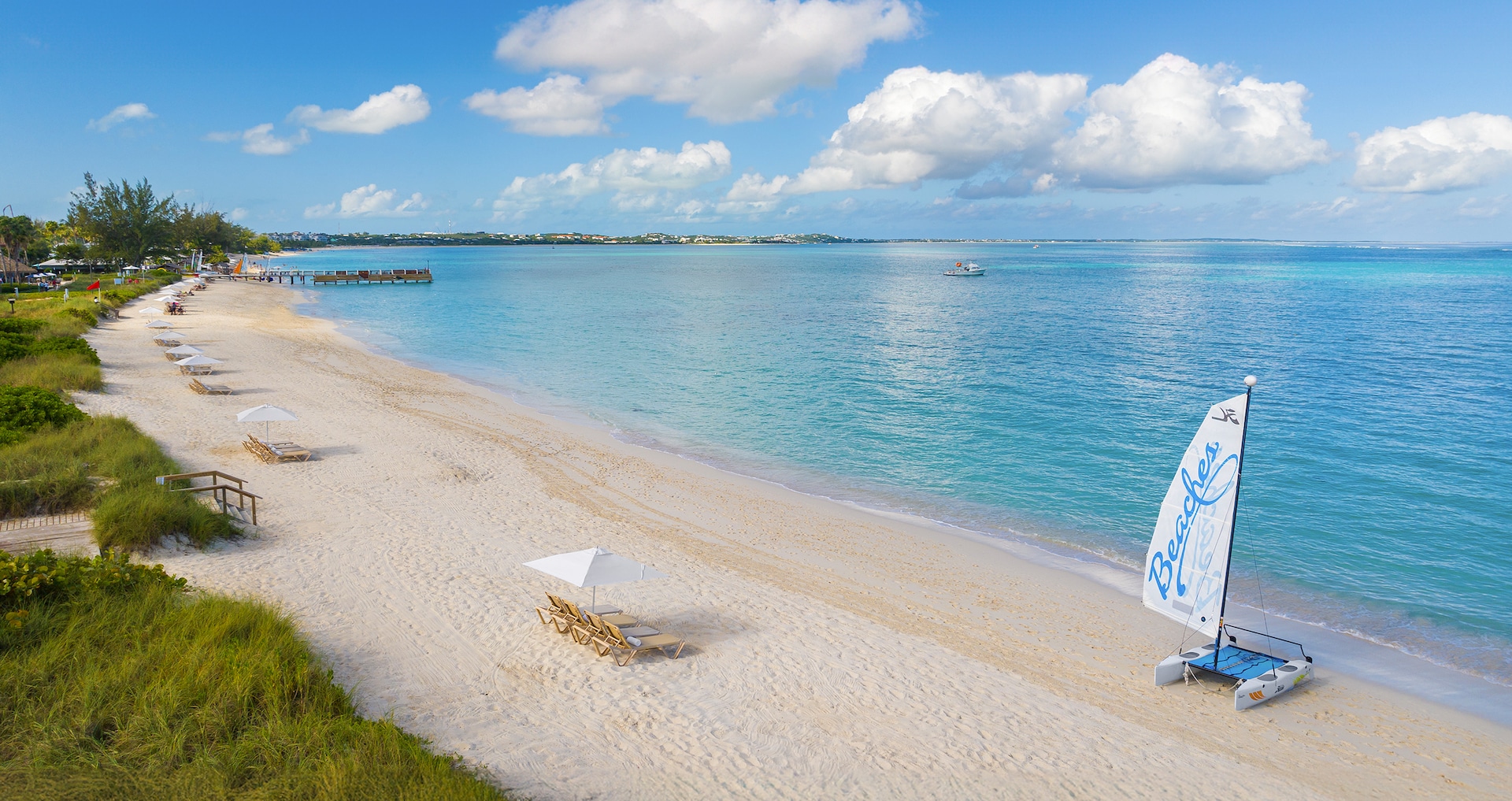 The resort fronts roughly half a mile of Grace Bay, with calm water inside the protective reef and gradual shelving that suits younger swimmers.
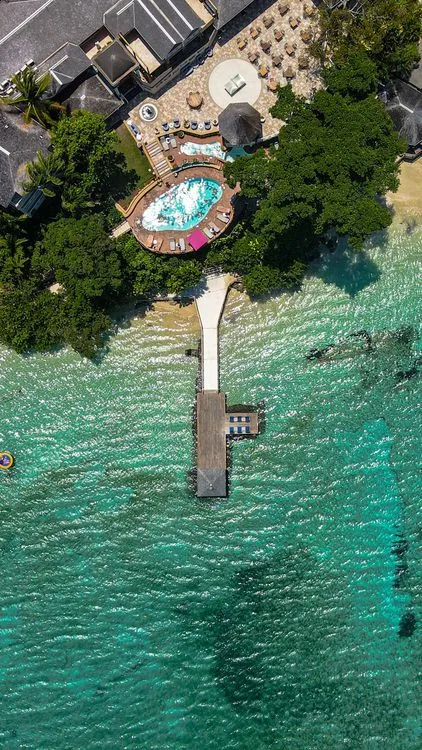
Pools are distributed across the villages, which is part of the design logic — you’re rarely more than two minutes from water. The French Village pool is the loudest and most family-active, with a swim-up bar and frequent staff-led games. The Italian Village pool runs quieter and skews to families with older kids. The Caribbean Village pool is the closest to the main entertainment plaza. Key West has its own quieter pool that’s the closest thing to “adult-feeling” water on property without actually being adults-only.
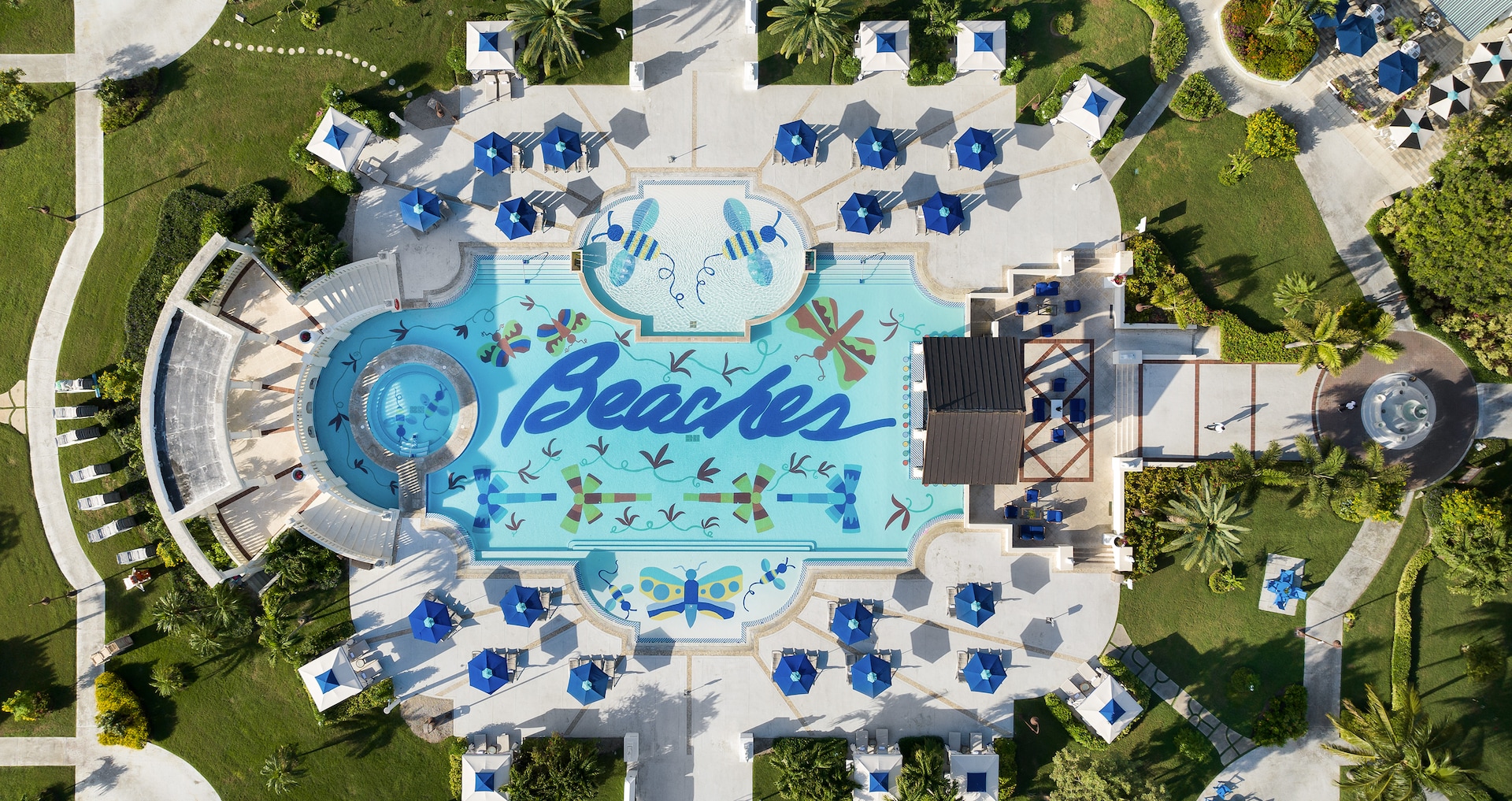 Each of the four villages has its own themed pool complex, which spreads crowds out across the property even at peak occupancy.
Pirate’s Island Waterpark is the X-factor. It includes a surf simulator (Surf Stream), eight waterslides ranging from toddler-mild to genuinely thrilling, a lazy river, and a splash pad for the under-five set. For families with kids roughly ages 5 to 14, this single amenity often justifies the price differential against any non-Beaches competitor. Lines at peak weeks can hit twenty minutes on the popular slides; off-peak weeks they’re walk-on.
Grounds are well-maintained, heavily landscaped, and large — the property runs to roughly 75 acres. That’s a lot of ground to cover with stroller and pool bag, which is where the tram circuit earns its keep.
The vibe
The vibe is unmistakably family-first, and that shapes every micro-decision on property. Mornings are quiet until about 8am, then the breakfast buffets get loud and stay loud. By 10am the pools are full and there’s a kids’ activity in progress somewhere within earshot. Afternoons spread out across beach, water park, and pools. Evenings have a structured entertainment program — Sesame Street character meet-and-greets, themed dinners, stage shows in the main plaza — that runs nightly.
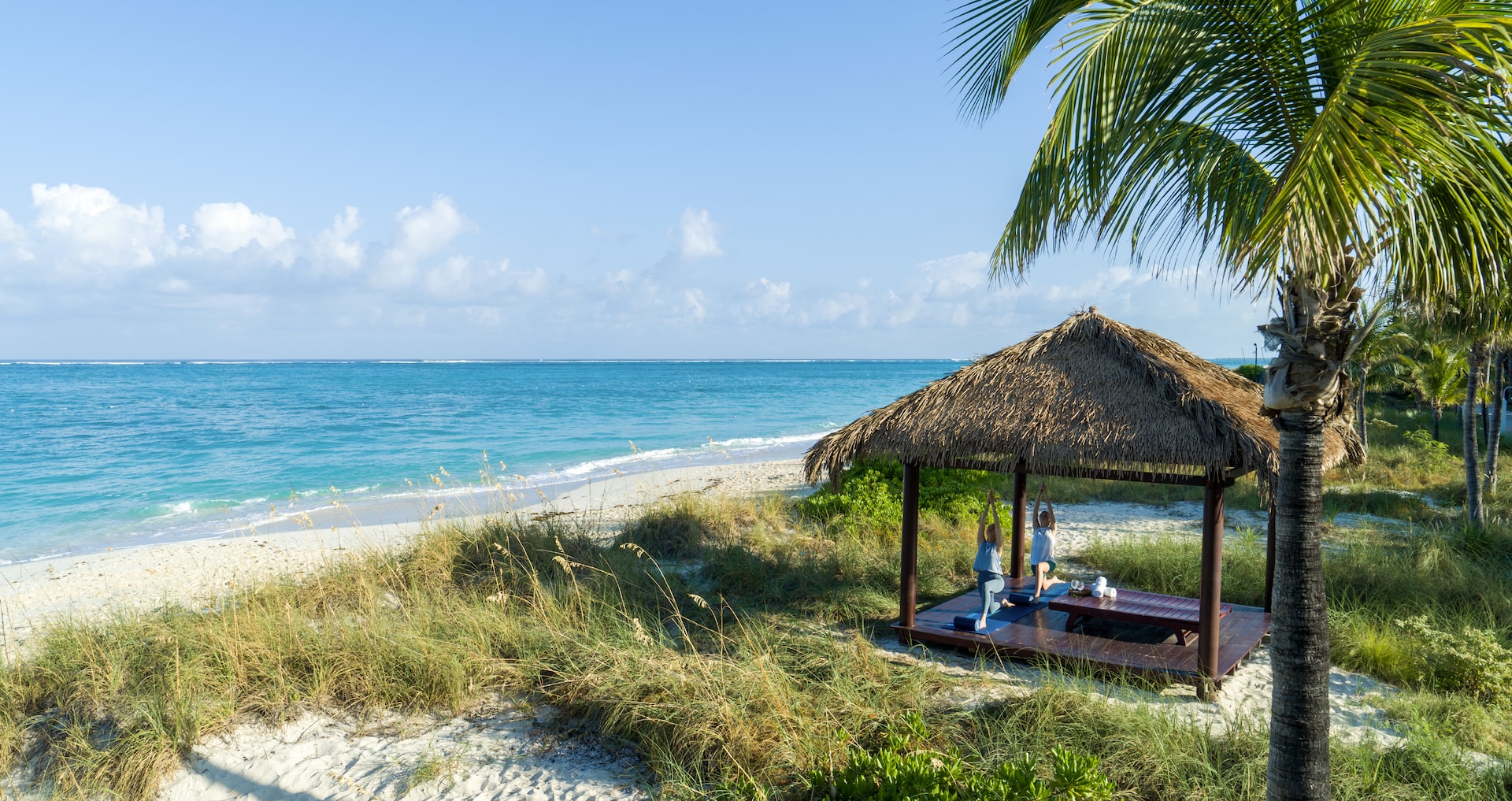 The adult-leaning programming is real but smaller in scale than the kids’ calendar — beach yoga and similar offerings run most mornings.
Demographically, expect roughly two-thirds American families with children under twelve, with strong contingents from the Northeast and Mid-Atlantic, plus meaningful Canadian and UK representation. Multi-generational groups — grandparents, parents, kids — are notably common, more so than at any other Caribbean property we cover. Spring break weeks and the late-December holiday window skew younger and louder; September through early November is the calmest stretch (with the hurricane-risk asterisk).
What the vibe is not: romantic, intimate, or quiet. There are pockets of quiet — a stretch of beach toward the Key West end after 4pm, the Sapodilla’s lounge before dinner — but the property’s dominant register is happy chaos. Couples without kids will feel out of place not because anyone is unkind but because the entire programming calendar is pitched elsewhere.
Service quality runs above the Caribbean average. Staff turnover seems lower than at comparable mega-resorts, and the same bartenders and restaurant hosts appear year over year per repeat-guest reports. The kids’ camp counselors in particular are a strong point — credentialed, patient, and clearly enjoying the work.
How it compares to other Sandals
Beaches isn’t a Sandals brand in the strict sense — Sandals is adults-only, Beaches is its family-inclusive sister — but it sits inside the same parent company, shares the booking infrastructure, and competes for the same overall vacation dollar. Comparing it to the Sandals flagships is the question most of our readers actually have.
| Compared to | Beaches Turks & Caicos advantages | Beaches Turks & Caicos drawbacks |
|---|---|---|
| Beaches Negril | 21 restaurants vs. 9; larger waterpark with surf simulator; 10-minute airport transfer; four themed villages | $1,500–$3,000 more per week; busier ambient energy; less authentic Jamaican character |
| Sandals Grande St. Lucian | Family-friendly — kids and multi-gen groups permitted; Grace Bay beach is wider and calmer; vastly more dining variety; on-site waterpark | Significantly higher peak pricing; busier ambient noise level; loses adults-only romance and quiet |
| Sandals Dunn’s River | Family-friendly — kids and multi-gen groups permitted; Grace Bay beach is calmer for swimming; vastly more dining variety; full kids’ programming and Sesame Street | Higher base pricing; busier ambient noise; not couples-focused |
The short version: if your trip requires bringing children, this is the strongest option in the combined Sandals/Beaches portfolio, full stop. If your trip does not require bringing children, every Sandals adults-only property on the comparison list will serve you better for less money. The pillar-ranking #1 slot reflects the family-travel use case specifically, not a universal “best resort” claim.
Pricing + when to book
Pricing here is structurally higher than the Sandals adults-only properties for two reasons: Turks and Caicos is a premium destination with no budget alternative on-island, and the resort genuinely costs more to run (water park, larger staff ratio for kids’ programming, more restaurants).
Realistic ranges for a family of four (two adults, two children) in a mid-tier room:
- Low season (early September through mid-October, excluding hurricane peak): $750–$950 per night all-in.
- Shoulder (May, June, early December): $950–$1,300 per night.
- High season (mid-January through April, plus US summer break): $1,300–$1,800 per night.
- Holiday peak (late December through early January, US spring break weeks): $1,800–$2,600+ per night, with minimum stays often enforced.
Butler-tier suites add roughly 40-60% to those numbers. Multi-bedroom suites for groups of six or more scale further.
Booking timing matters more here than at most Caribbean properties because the holiday and spring break weeks genuinely sell out four to six months ahead. For peak holiday travel, book by the previous spring. For summer break, book by January or February of the travel year. Shoulder and low season have room into the last six to eight weeks before travel.
Discounts worth knowing: the resort runs a recurring “kids stay free” promotion on specific room categories (typically the higher-tier suites), a returning-guest discount of around 10%, and periodic “book early, save” structures that stack with the kids-free offer. Travel agents with significant Beaches volume sometimes access additional rate categories not publicly listed — worth a quote.
Travel insurance for hurricane season is not optional in our view; the resort’s own cancellation policy is reasonable but does not cover named-storm scenarios in full.
What we’d actually do
- Phone setup: Install a small destination eSIM before departure and keep carrier roaming as backup. See our Caribbean honeymoon eSIM guide for the exact setup.
For a family of four on a seven-night stay, here’s the itinerary that consistently delivers the best return per dollar spent:
-
Day one: book your dinners. After check-in, before anything else, walk to the dining reservations desk and book Kimonos, Sapodilla’s, Le Petit Château, and Barefoot by the Sea across the week. The popular venues fill by mid-week, and the difference between eating at these four and rotating through buffets is the difference between a good week and a great one.
-
Front-load the water park. Hit Pirate’s Island Waterpark on days two and three when jet lag still has the kids up early. Lines are shortest before 10am. By mid-week the novelty fades and the kids will gravitate toward the beach and pools regardless, so capture the water park energy when it’s fresh.
-
Build in one off-property half-day. Book a half-day excursion to either the Bight Reef snorkel site or a sailing trip to the uninhabited cays north of Provo. The on-property snorkeling is fine; the off-property snorkeling is genuinely world-class, and seeing it changes how the rest of the trip feels. Budget $80–$150 per person depending on operator.
-
Reserve one adults-only evening. Use the kids’ night-out program (camp runs until 10pm) to get a Sapodilla’s reservation just for the adults in your party mid-week. The resort’s family register is constant; carving out two hours of it deliberately is the difference between leaving rested and leaving merely entertained.
Verdict
Book if: you’re traveling with children of any age, you’re planning a multi-generational trip where grandparents and grandkids both need to be happy, you want a single-resort vacation where logistics (transfers, dining, kids’ programming, beach quality) are handled without you managing them, or you’ve prioritized Grace Bay specifically and want the most family-equipped property fronting it. Book if your budget can absorb $1,000+ per night without flinching, because anything less puts you in room categories and seasons that don’t show the property at its best.
Skip if: you’re a couple without kids — every Sandals adults-only property will serve you better for less money, and the ambient family energy here will work against the trip you’re trying to have. Skip if you’re price-sensitive; there are competent family all-inclusives in Punta Cana and Riviera Maya at half the nightly rate, and while they’re not as good, the delta isn’t always worth the spread. Skip if you want a small, intimate property where staff learn your name and the dining room has twenty tables — this is a 75-acre operation with four villages and 21 restaurants, and that scale is fundamental to what it is. Skip if your travel window falls in September or October and you can’t carry hurricane-grade trip insurance.
For the use case it’s built for — family travel where parents need the vacation to actually feel like one — this remains the strongest single property we cover.